What sticks, what slides off, and how far can the pull reach?
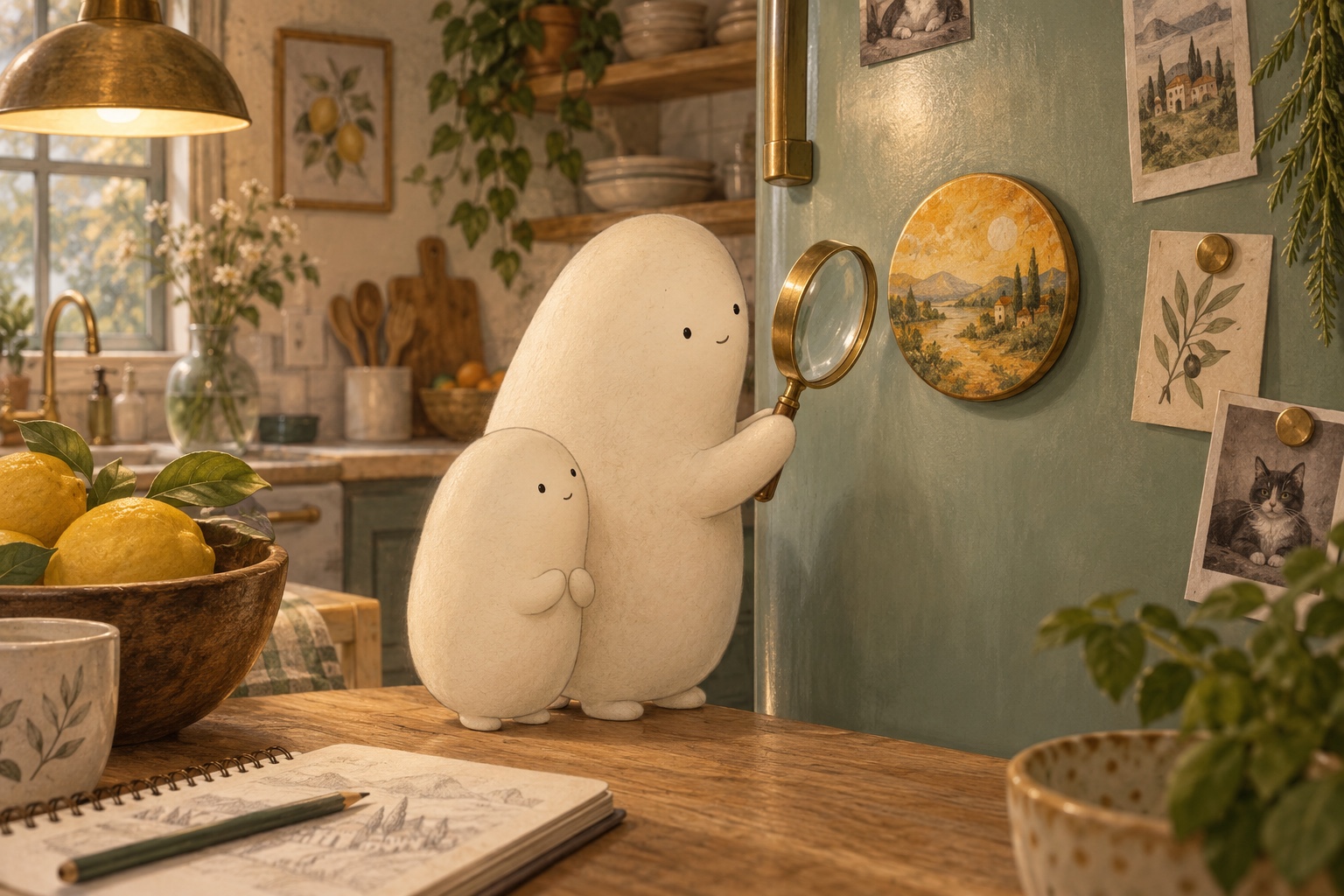
Where shall we look?
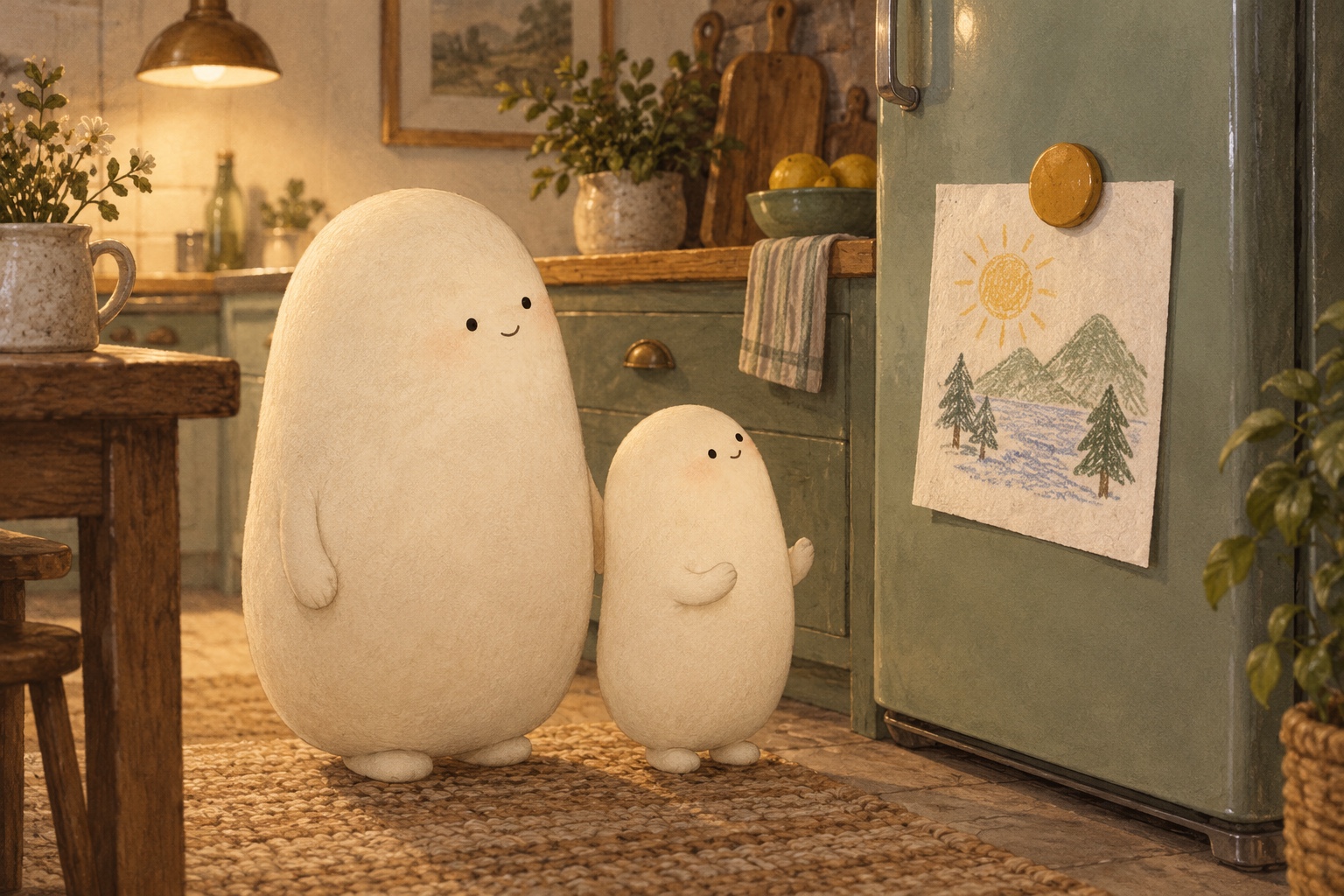
The magnet and steel door pull toward each other.
What holds a magnet to the fridge?
Look at the magnet holding the paper drawing.
A little explanation & something to try
The magnet and the steel in this fridge door pull toward each other. The pull helps the magnet stay put. It can act through a thin piece of paper; the paper does not have to be magnetic.
Try this. Point to the magnet, the paper, and the steel door. Tell which two pull toward each other.
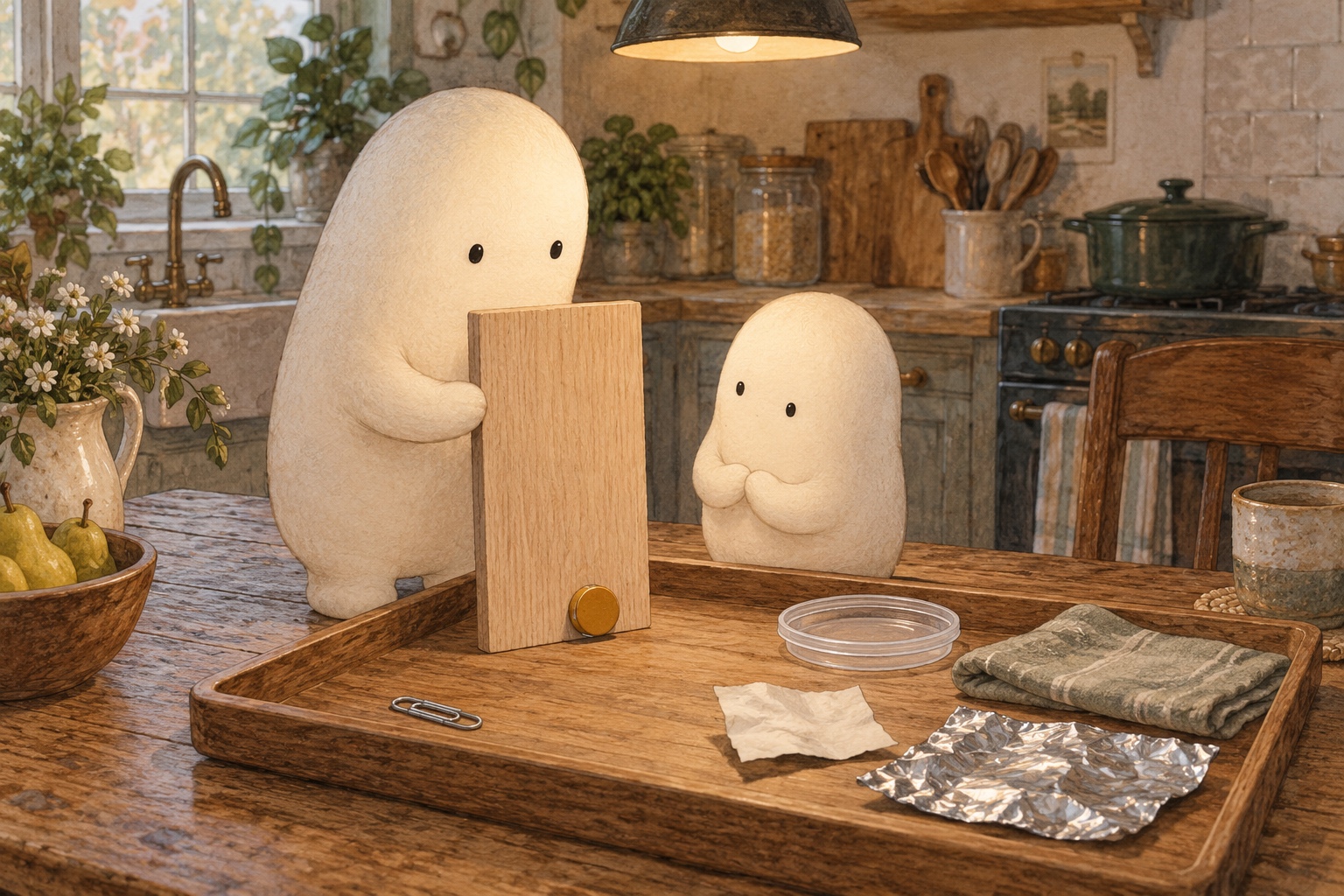
Wood and plastic do not hold the magnet.
Will it stick to every surface?
The magnet rests at the bottom of the wood board.
A little explanation & something to try
Magnets stick to some metals, including iron and many kinds of steel. They do not stick to wood, plastic, paper, or cloth. Aluminum foil and copper do not stick to an ordinary fridge magnet either.
Try this. With Big nearby, predict and try a few fridge magnets on a fridge door or steel cookie sheet and a tray of paper, a plastic lid, wood, aluminum foil, and a steel paperclip. Notice what sticks and what slides. Keep magnets away from screens, cards with stripes, and mouths.
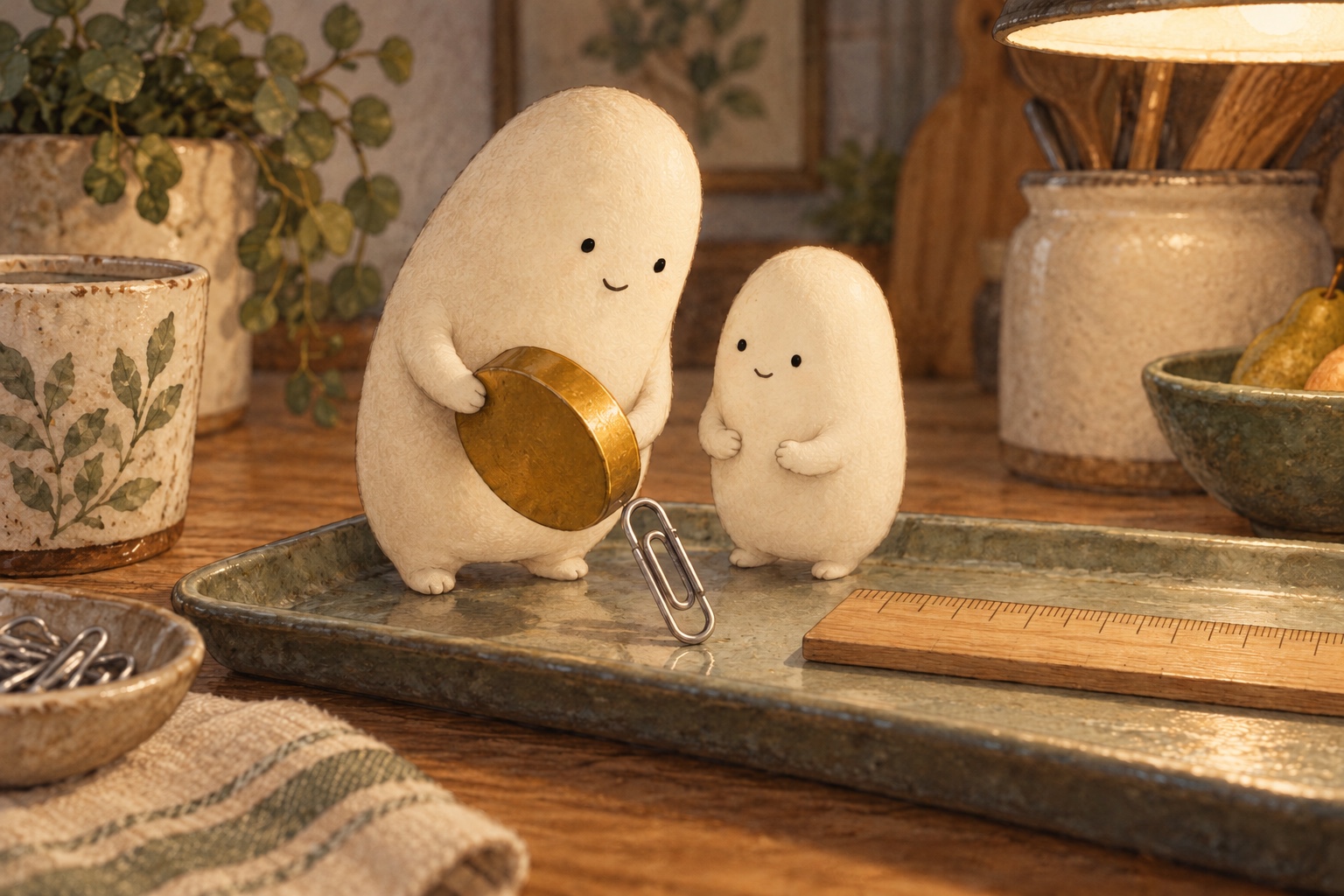
Closer makes the pull stronger.
How far can the pull reach?
Look for the tiny gap beside the paperclip.
A little explanation & something to try
A magnetic pull can act across a gap. The closer the magnet is, the stronger the pull. Farther away, it gets weaker. Different magnets and objects can give different results.
Try this. With Big beside you, slowly move a magnet toward a steel paperclip on a tray. Use a ruler or finger-widths to compare the gap where it first moves. Lift the paperclip a little with the magnet, then gently draw them apart over the tray until it lets go.
Turning a magnet can change a pull to a push.
Can two magnets push apart?
Look at the two ends facing each other.
A little explanation & something to try
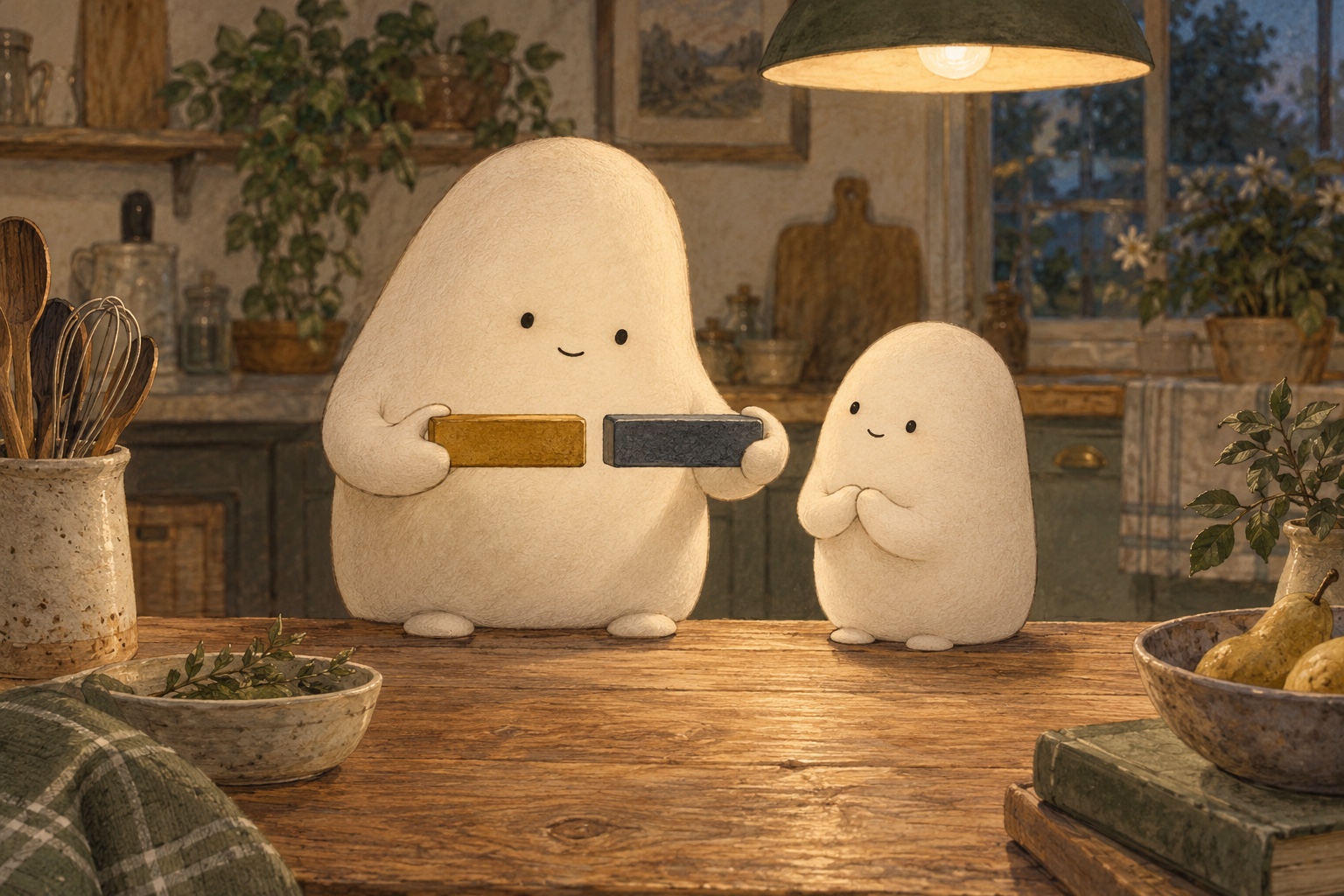
Two magnets can pull together or push apart. Turning one magnet can change which ends face each other, changing the pull to a push.
Try this. With Big, turn one of two large magnets around and notice whether they pull together or push apart.
Follow the pull
Fridge Magnets
A small kitchen mystery
Little Wonderer noticed a round magnet on the fridge. It stayed in place without a hand holding it. A magnet is an object that can pull certain metals toward it. Little brought the magnifier closer. “What makes it stick?” Big Wonderer stood beside Little, ready to look for clues.
What clue suggests a pull can act before things touch?
A pull that holds
Big lifted the magnet, then brought it close to the door. Little felt a tug before it touched. The magnet and the steel in this fridge door pulled toward each other. That pull helped it stick, or stay in place. A paper drawing stayed between them, even though the paper itself was not magnetic.
Why can a magnet hold paper to a steel door without pulling on the paper itself?
Try another surface
Would the same magnet stick everywhere? Big held up a wood board over a tray. The magnet began to slide, moving down the smooth surface. It did not stick to the plastic lid, paper, or cloth either. Shiny aluminum foil did not hold it. “Metal is not one kind of stuff,” Little noticed.
How did the foil test change the idea that all metal sticks?
A pull across a gap
Big set a steel paperclip on the tray, then moved the magnet nearer. Little watched the paperclip tip toward it across a small gap. Closer made the pull stronger. Farther away made it weaker. They moved slowly and checked the gap with a ruler. The distance that worked depended on this magnet and this paperclip.
How could you check whether moving closer changes the pull?
Turn and try again
Big brought out a second magnet. One way round, the magnets pulled together with a little snap. Big turned one around. Now their facing ends pushed apart. Little tried to bring them closer and felt the push. The same two magnets could pull or push, depending on how their ends faced.
What changed when Big turned one magnet around?
A question to keep
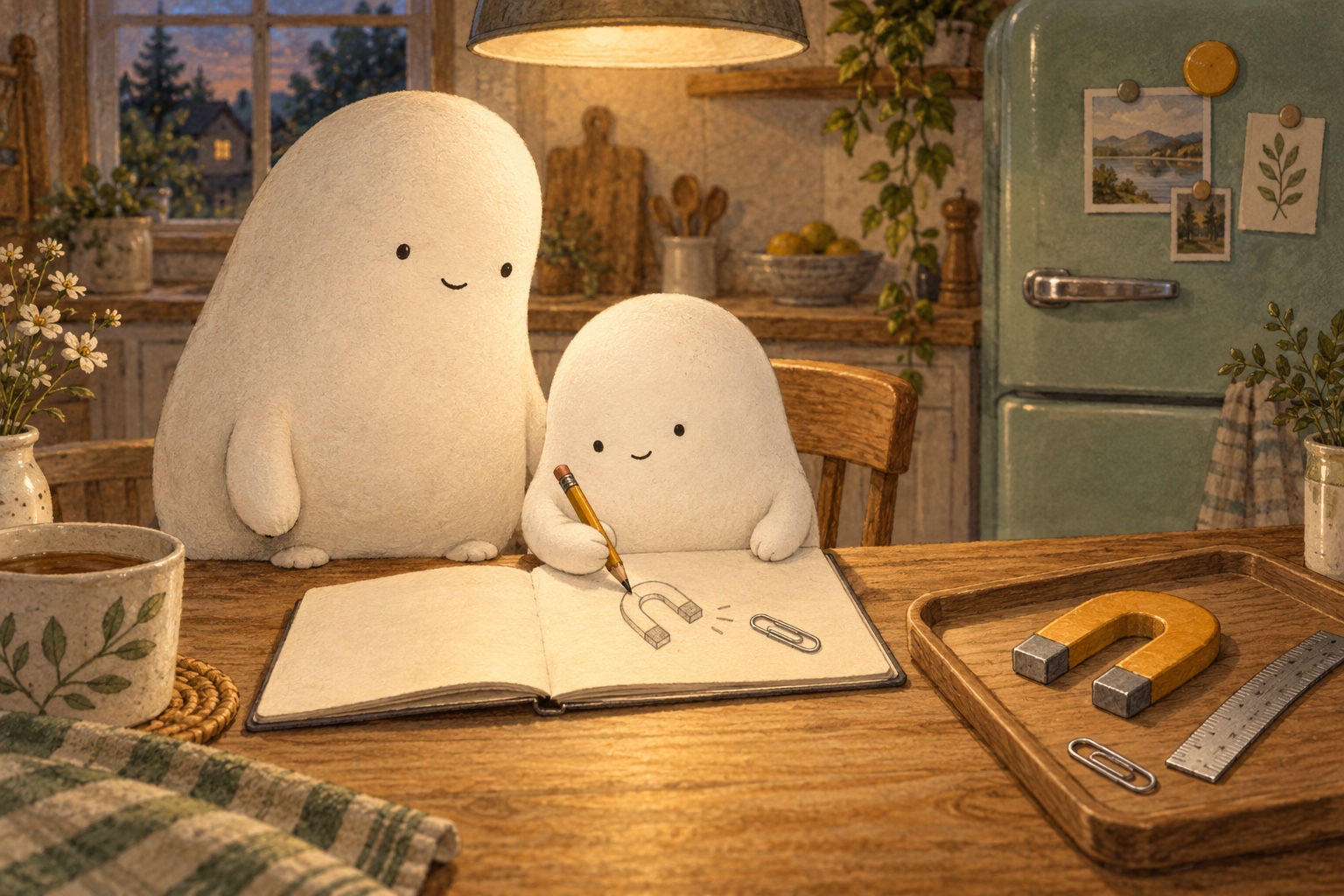
Little drew the fridge, the wood board, and the paperclip in a notebook. “Some things stick. Some slide. And a pull can cross a gap!” Big nodded. Little left room for one more question: “What sticks, what slides off, and how far can the pull reach?”
Which test would you repeat to learn how far the pull reaches?