How can quiet marks on a screen turn into something you can learn?
Where shall we look?
What could these quiet marks be for?
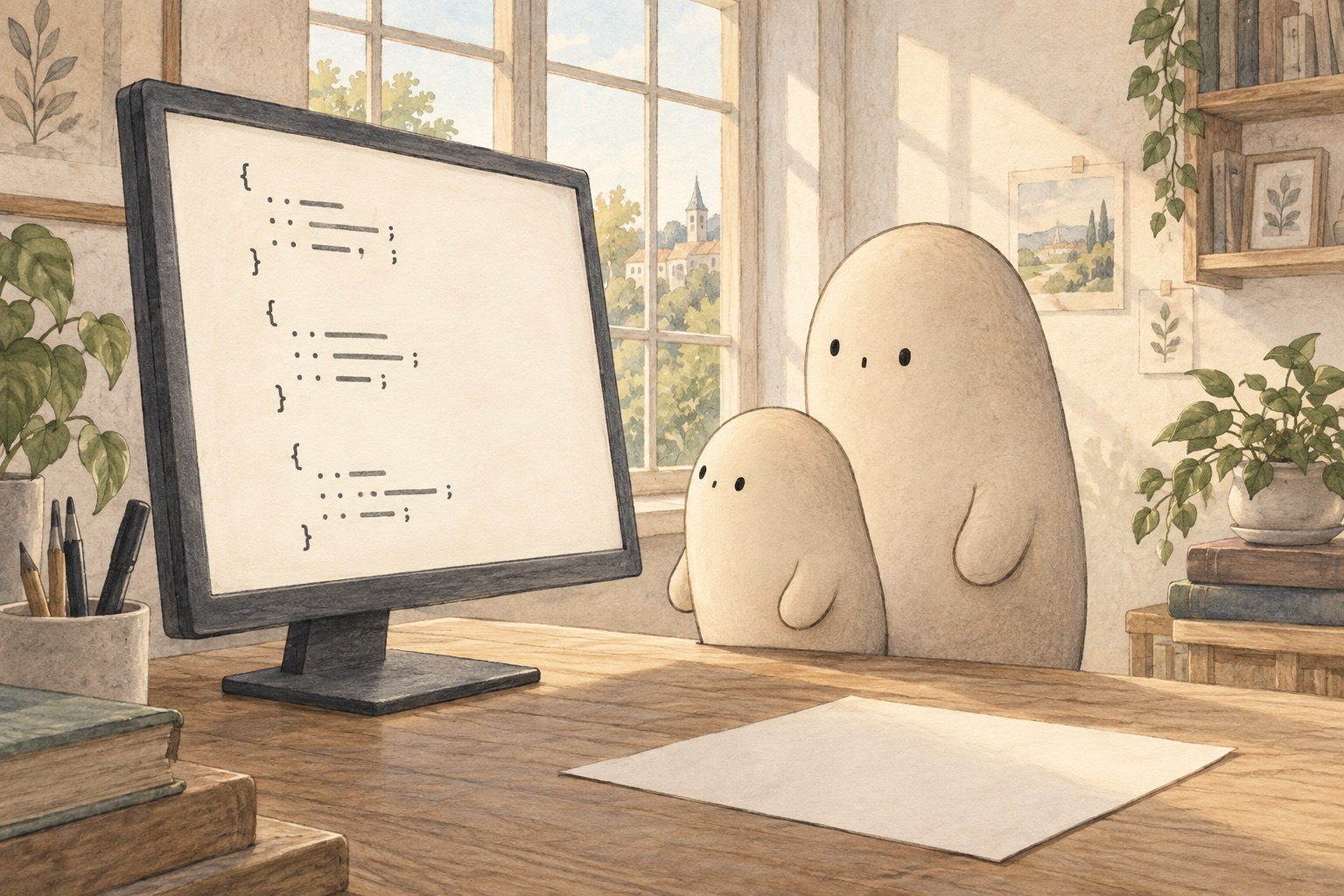
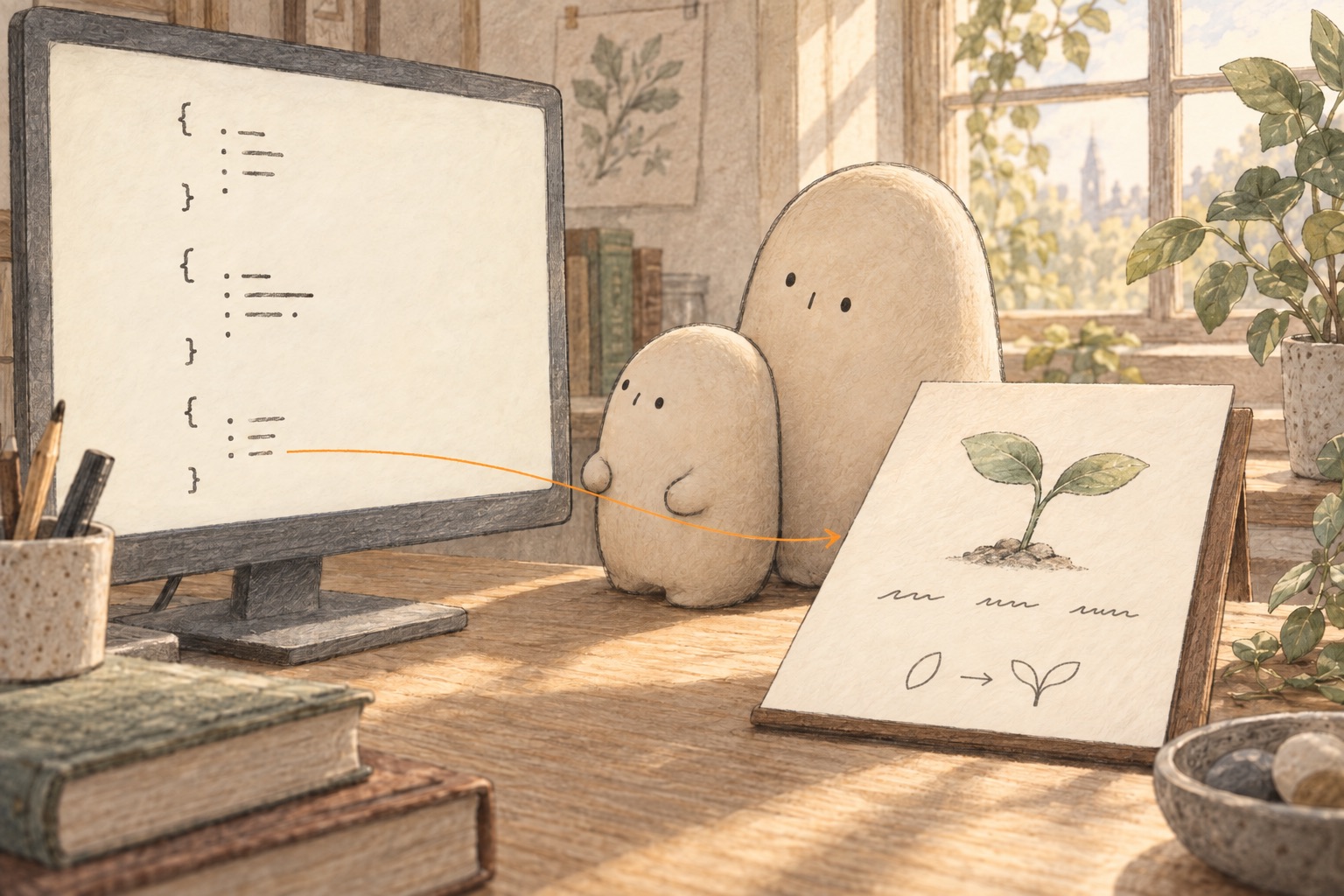
Look at the screen. Are the marks scattered, or lined up? Find where Little's eyes rest first.
A little explanation & something to try
The marks look like a secret language. They are instructions — tiny written jobs a machine can follow. Alone, one mark does almost nothing. Together in a list, they can build something new.
Try this. Point to one mark, then the next. What changes if you skip one in the middle?
Why does the order of the jobs matter?
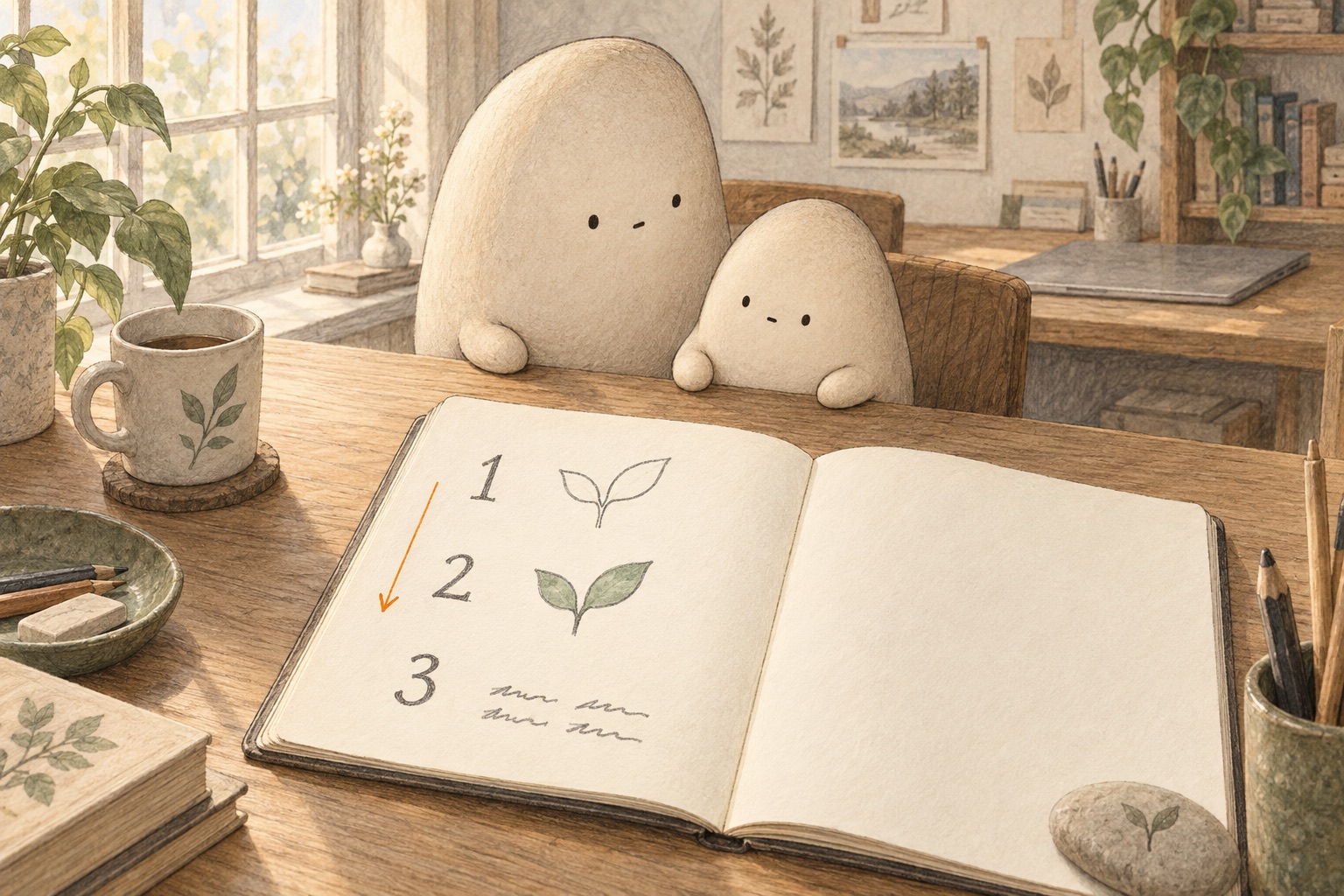
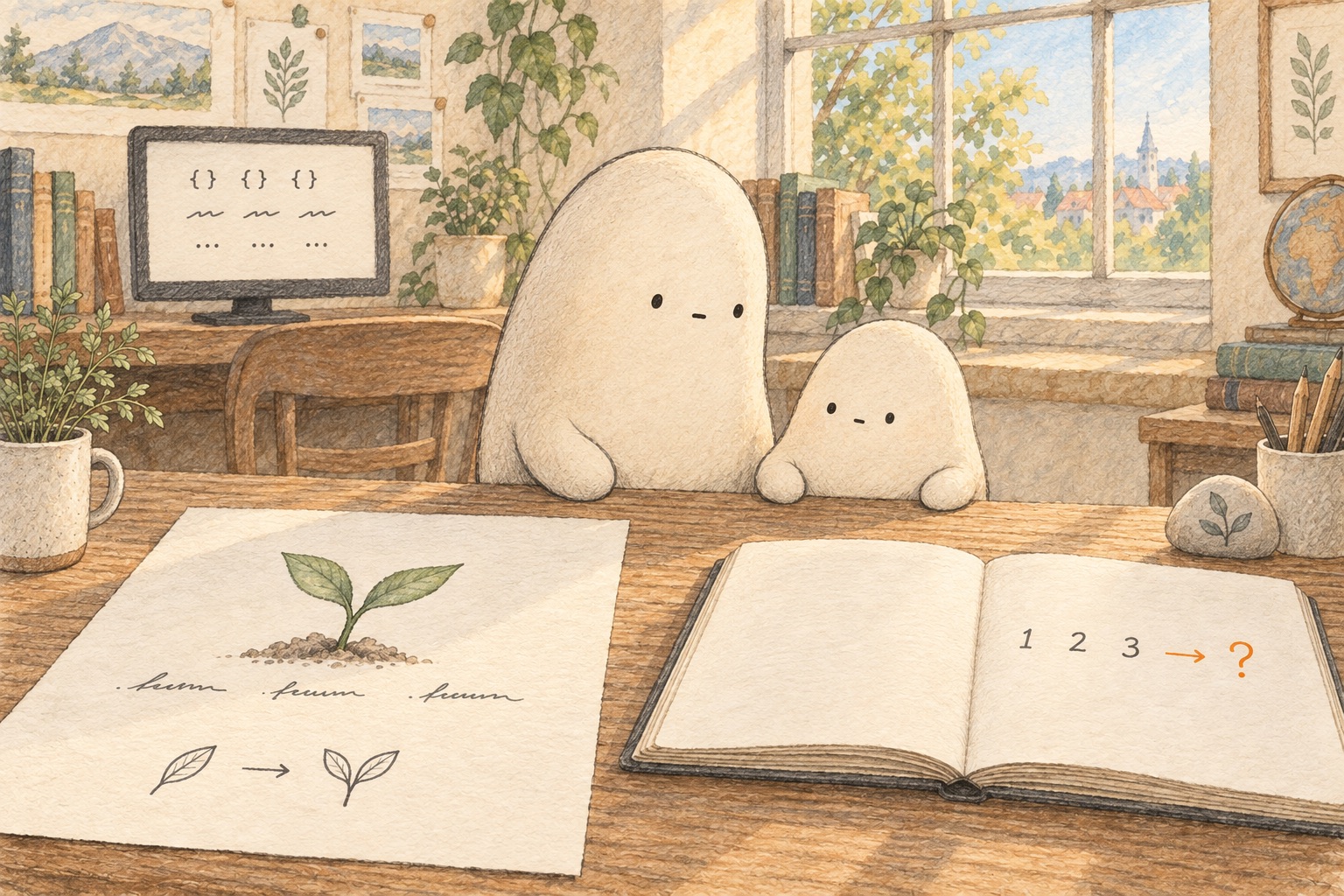
Find the numbered steps on the notebook. Which job comes first? Which comes last?
A little explanation & something to try
A sequence is a careful order. Job 1 must finish before job 2 begins. If you draw the picture after you place the words, the page looks different than if you reverse those jobs. Order is part of the plan.
Try this. Say three morning jobs out of order. What goes wrong? Put them back in a sequence that works.
What happens when each job is followed?
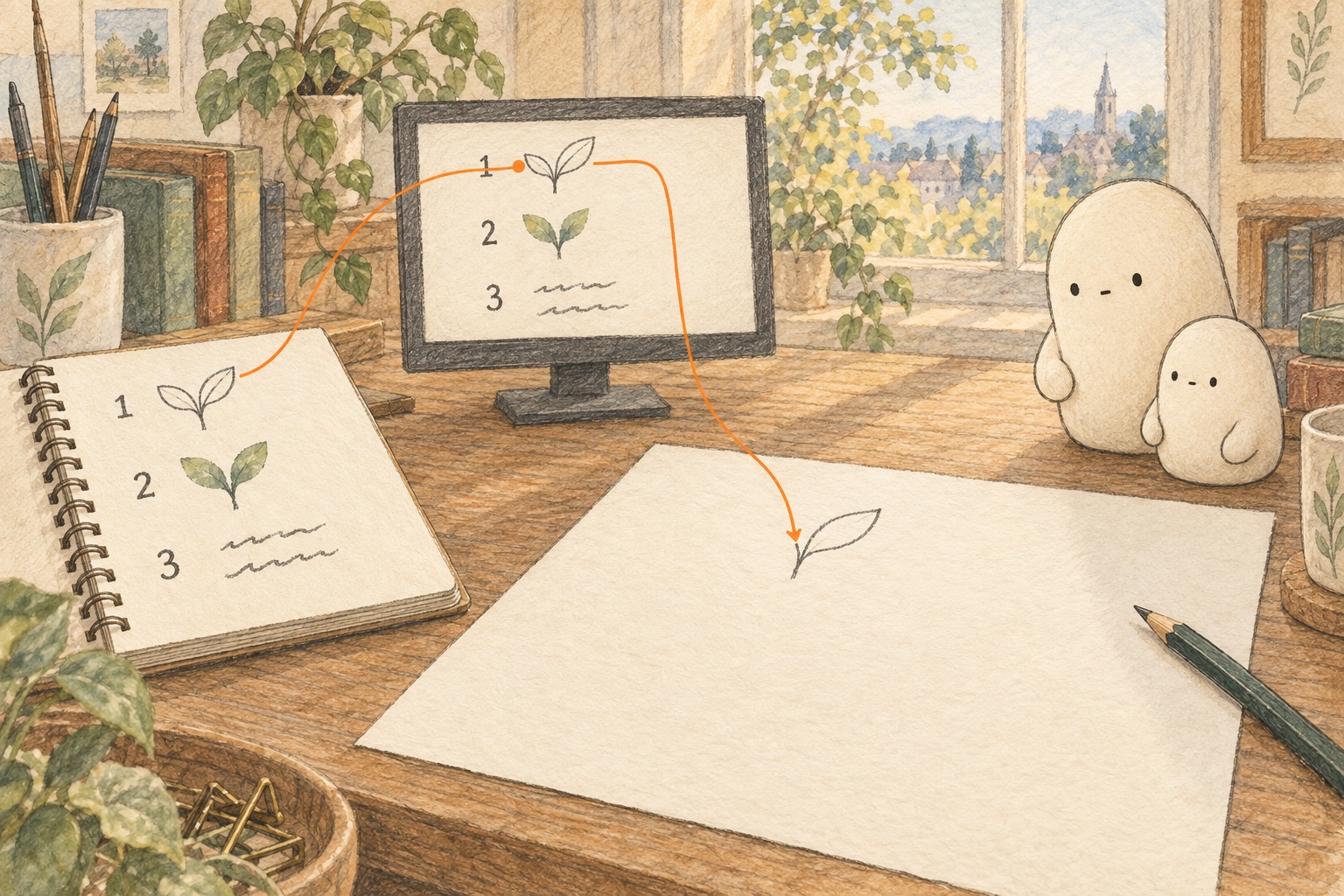
Watch the path from the list to the blank page. Where does a new shape first appear?
A little explanation & something to try
A helper — here, a quiet computer — follows each instruction exactly. One job places a line. The next adds a color wash. The next lays down a word. The page transforms: it changes from blank to pictured.
Try this. Trace the orange path from one job to the page. Which job left the first mark you can see?
How do we know the jobs worked?
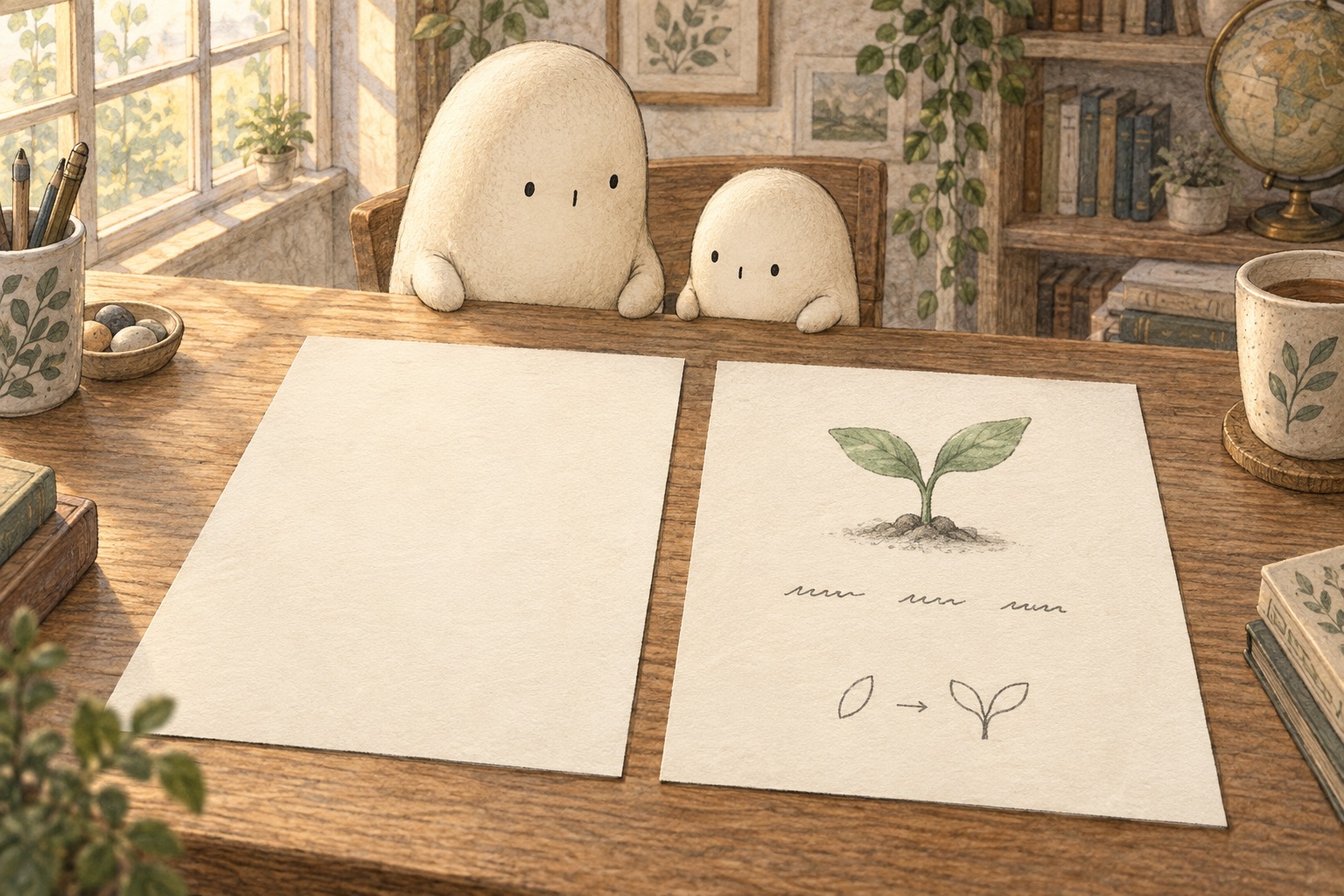
Compare the blank page on the left with the finished page on the right. What new evidence appears?
A little explanation & something to try
Evidence is a clue you can point to. The blank page had no picture and no sentence. The finished page shows both. That difference is evidence the instructions ran. We infer — we build an idea — that the ordered jobs made the change.
Try this. Name two details that were missing before and are present now. Why are two details stronger than one?
A story of ordered jobs
From marks to a morning.
Quiet marks
Little Wonderer leans toward a soft screen. The marks are neat, not scribbles. “Are they a secret?” Big Wonderer waits. One mark alone does almost nothing. A list of marks can be instructions — tiny jobs written so a machine can follow them.
Which detail makes the marks look planned instead of accidental?
Jobs in order
On the notebook, three jobs sit in a line: first, next, then last. That careful order is a sequence. If the last job ran first, the page would look wrong. Little copies the order with a finger. The plan lives in the sequence, not in any single mark.
What can go wrong if two jobs switch places?
Each job runs
A quiet helper follows job one, then job two, then job three. A line lands. A wash of color follows. A word settles into place. The blank page transforms — it changes because each instruction ran in turn. Little watches the path from list to paper.
Which job left the first mark you can point to on the page?
A page appears
Left: a blank page. Right: a picture and a short sentence. That difference is evidence the jobs worked. Little builds an inference: the ordered instructions made the finished page. One detail could be luck. Two matching changes are harder to ignore.
Which two details are the strongest evidence that a change happened?
Marks mean a lesson
Little returns to the first screen of marks. Beside it rests a finished morning sheet — a lesson ready to use. The earlier guess (“secret scribbles”) no longer fits. The marks were a plan to transform instructions into something you can learn.
How did comparing the first marks with the finished sheet change Little's idea?
Keep one question
The lesson is here: words, a picture, a puzzle to try. Code became a daily morning. Little keeps one precise question: What else could a careful sequence of jobs become? Another picture? A song of clicks? The next list is waiting.
What new evidence could support or challenge the idea that order matters?
For a complete still story, download the foldable book.
A job list to count
Use these notebook numbers about building a lesson page.
Notebook · height above soil
Day
1
2
3
Height
12 cm
19 cm
31 cm
1. Job counts grow across three mornings: 12, then 19, then 31. Find the change from morning 1 to 2 and from morning 2 to 3. Which change is greater, and by how much?
19 − 12 = ___; 31 − 19 = ___; ___ − ___ =
A small hint
Find both changes first. Then subtract the smaller change from the greater one.
2. One sequence uses 14 picture jobs and 9 word jobs. After that, 6 check jobs still wait. How many jobs are done before the checks? How many jobs in all?
14 + 9 = ___; ___ + 6 =
A small hint
Add the picture and word jobs first. Then add the checks.
3. Someone says the total change from morning 1 to morning 3 is 18. Use the table to decide whether the claim is true and correct it.
31 − 12 =
A small hint
Subtract the first value from the last value. Compare your result with 18.
Explain a tiny transform.
Choose a scene. Write two linked sentences: one observation, then an explanation using because. Draw a detail that supports your idea.
The order matters because …What changes if two jobs switch places?
The page begins to change because …Which job left the first mark you can see?
I infer that the jobs worked because …Compare the blank page with the finished page.
Draw the detail you noticed. Add an arrow to show order or a path from job to page.
SAY IT FIRST. THEN DRAW OR WRITE.
A temporary space. Copy your words before closing or reloading; they are not saved or sent.