Wonder TogetherWONDER DAILYAll mornings

The drops that did not fall.

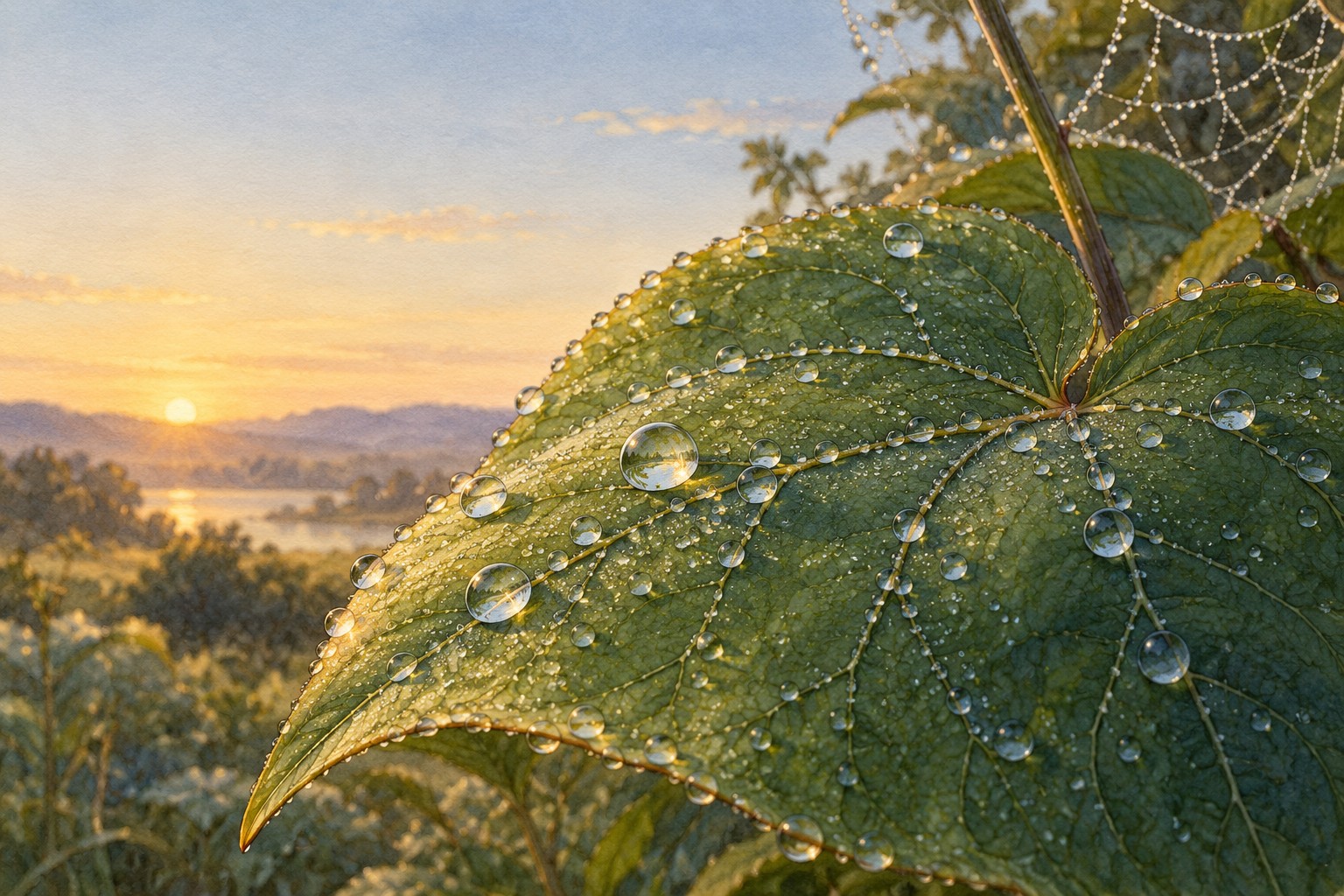
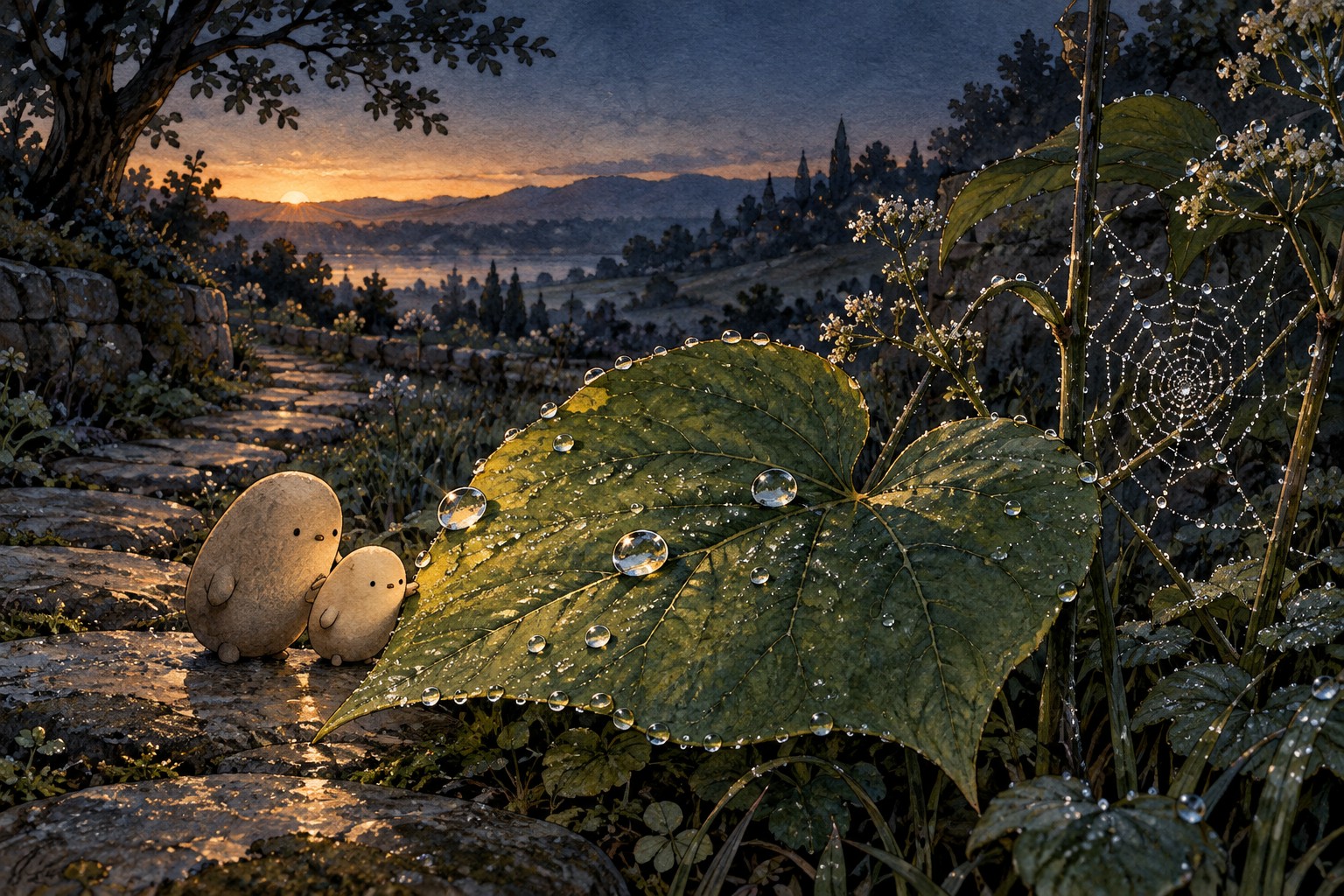
No rain fell. Why is this leaf wet?

Big and Little Wonderer study tiny drops on a broad green leaf beside a beaded spider web before sunrise.

Can a leaf get wet without rain?

Look at the drops on the leaf and the nearby spider web.

A little explanation & something to try

Yes. Air holds invisible water vapor. Dew forms right on a cool surface when that vapor condenses into liquid drops. It does not fall from the sky like rain.

Try this. Point to where the drops sit. Imagine a drop growing there, instead of falling down.

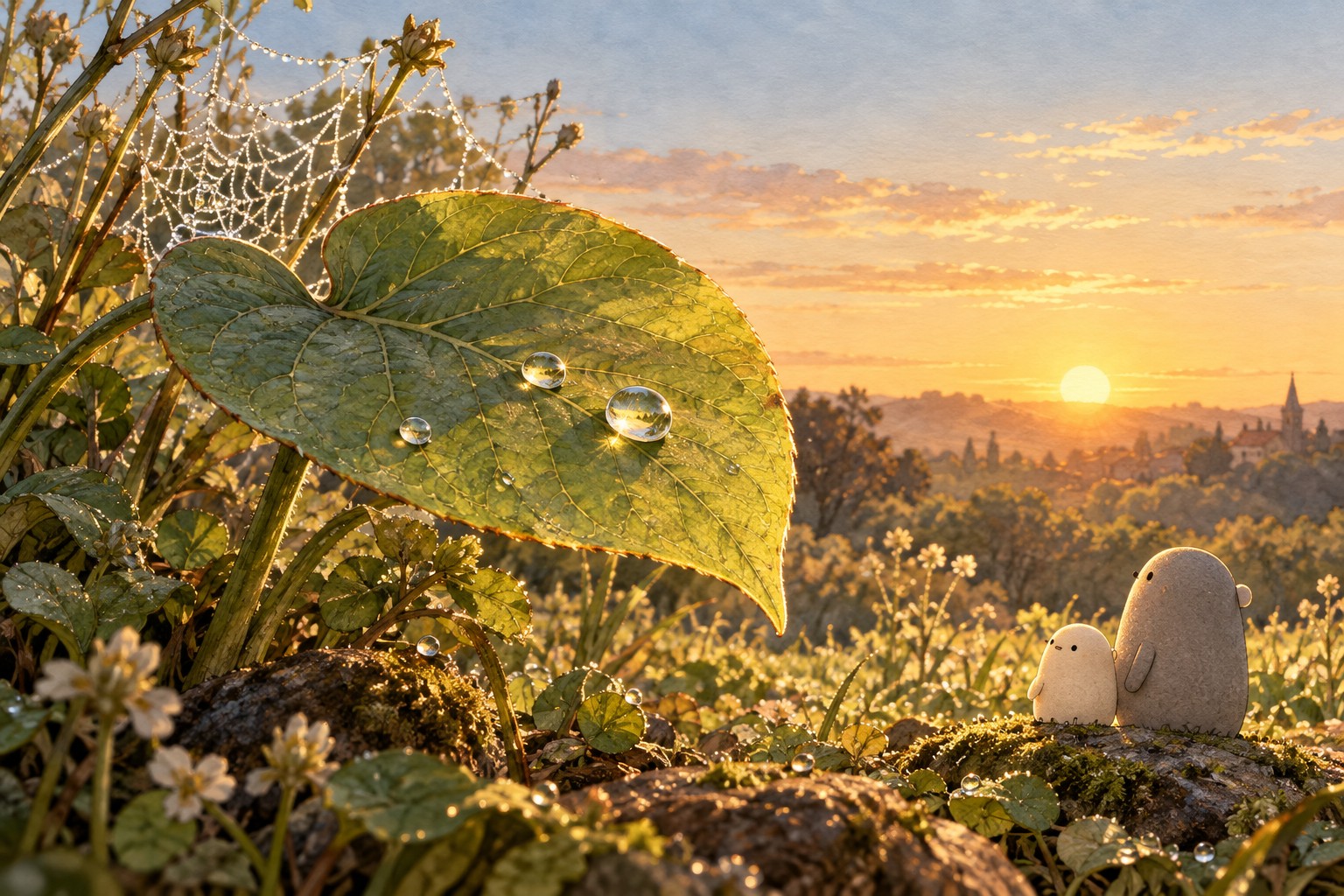
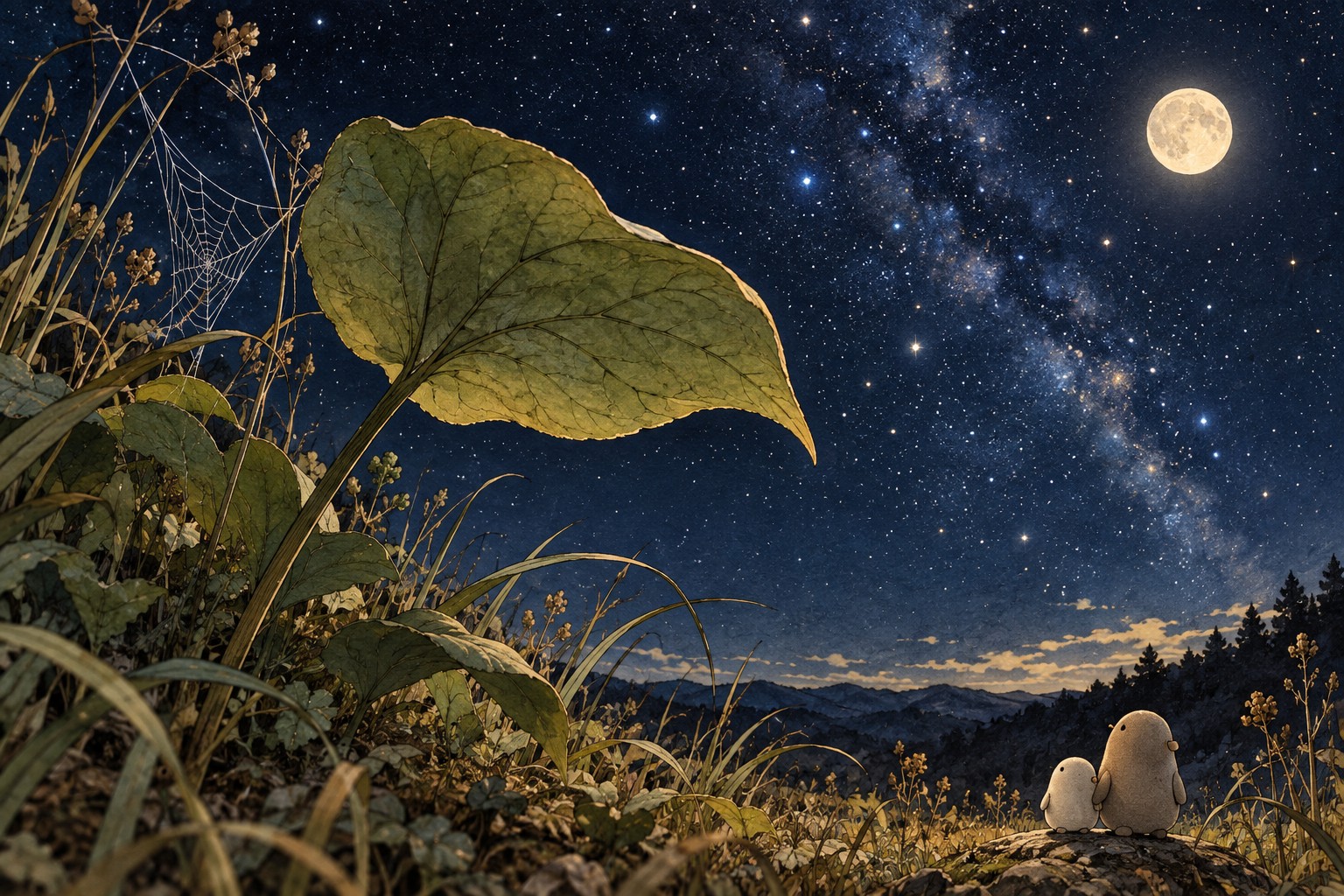
The same broad leaf rests under a clear night sky, with grass and a fine spider web nearby.

How does a leaf cool during the night?

The leaf faces a wide, clear sky. The grass is still.

A little explanation & something to try

Surfaces give off heat to the sky. On a clear, calm night, a leaf can lose heat and get colder than the air around it. Clouds and wind can slow that cooling.

Try this. Trace the leaf’s edge. Say the first command: “Cool the leaf.”

A close view of tiny new droplets clinging to the surface of the same leaf; the air above it is clear.

Where was the water before we saw drops?

The air above the leaf looks clear. New beads cling to the leaf.

A little explanation & something to try

The water was invisible vapor in the air. Air touching the cool leaf cools too. At its dew point, it is cool enough that it cannot keep all its water invisible. Some vapor condenses into liquid dew.

Try this. Imagine clear air touching this leaf. Use “condense” to tell what changed.

Warm sunrise reaches the same leaf; only a few dew beads remain as Big and Little Wonderer look on.

Where do the drops go after sunrise?

Sunlight reaches the leaf. Fewer drops remain.

A little explanation & something to try

As the sun warms the leaf, liquid water evaporates back into invisible vapor. The water changes form; it does not vanish forever. A cold glass can collect drops on its outside for the same condensation reason: that water comes from the surrounding air.

Try this. Say two commands in order: “Warm the leaf. Watch the drops shrink.”

Little’s instructions for dew

Big and Little Wonderer study tiny drops on a broad green leaf beside a beaded spider web before sunrise.

The drops that did not fall.

Big and Little Wonderer study tiny drops on a broad green leaf beside a beaded spider web before sunrise.

A quiet puzzle

Before sunrise, Little Wonderer found tiny drops on a leaf. A spider web beside it wore shining beads. “Did I miss the rain?” Little asked. The path was dry. Big Wonderer knelt beside the leaf. “Let’s follow the clues back through the night.”

Which clue makes the drops a mystery?

The same broad leaf rests under a clear night sky, with grass and a fine spider web nearby.

The open night

The night had been clear and calm. The leaf gave off heat to the open sky. It cooled and could get colder than the air around it. Little began a list of nature’s instructions: “1. Cool the leaf.” Nothing had fallen from the sky.

Where did the leaf give off heat?

A close view of tiny new droplets clinging to the surface of the same leaf; the air above it is clear.

Water we cannot see

Air holds water vapor, water in a gas form we cannot see. Air touching the cool leaf cooled too. At the dew point, it was cool enough that it could not keep all its water invisible. Little added: “2. Wait for the air to touch it.”

What water was already in the air?

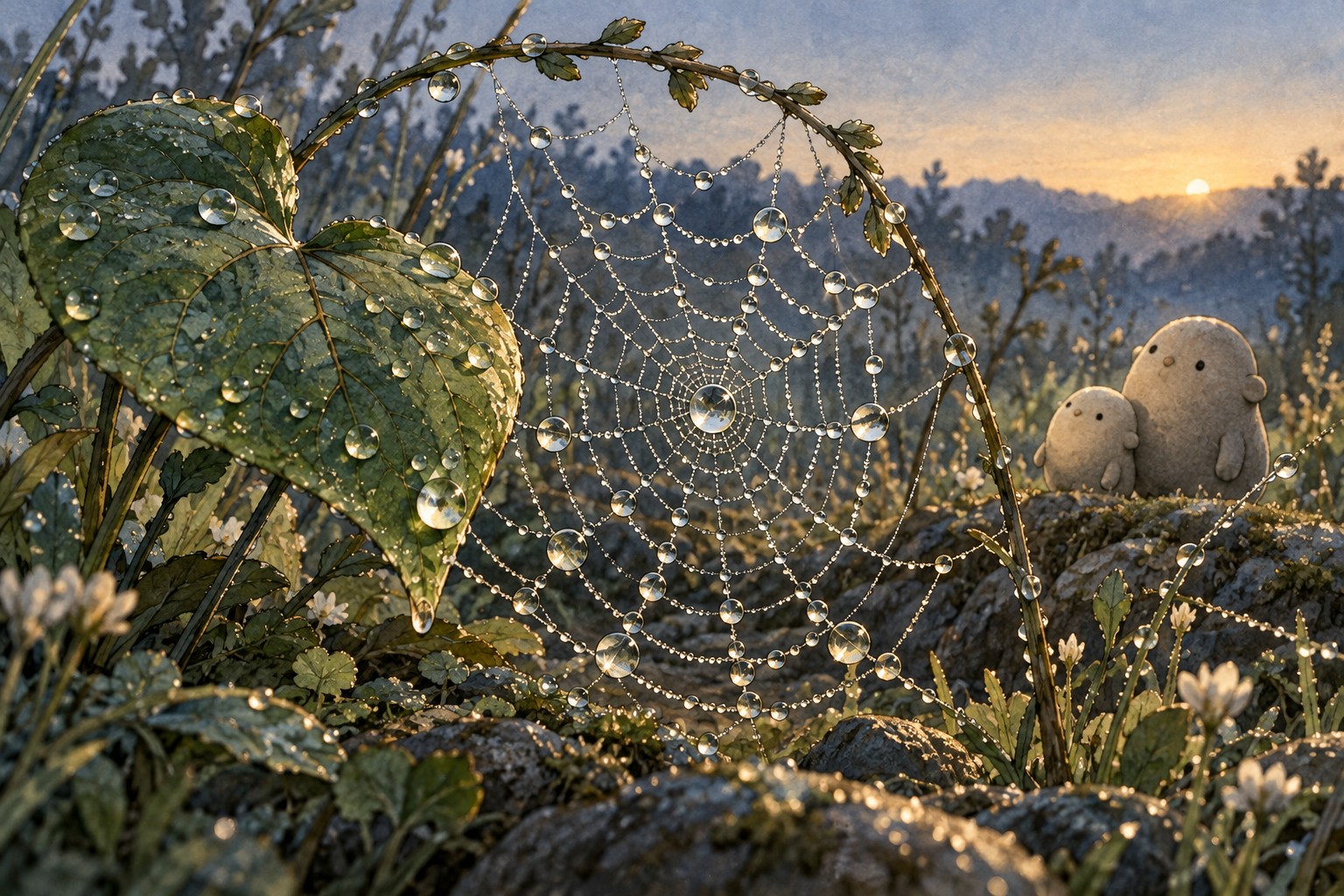
Dew beads shine along a spider web beside the broad leaf, with Big and Little Wonderer looking closely.

Beads on a thread

Tiny drops formed right on the leaf. Water vapor had begun to condense: it changed from a gas into liquid water. That water was dew. The cool spider web held beads too. “3. Look for tiny drops,” Little wrote. “They formed here. They did not fall like rain!”

Where did these drops form?

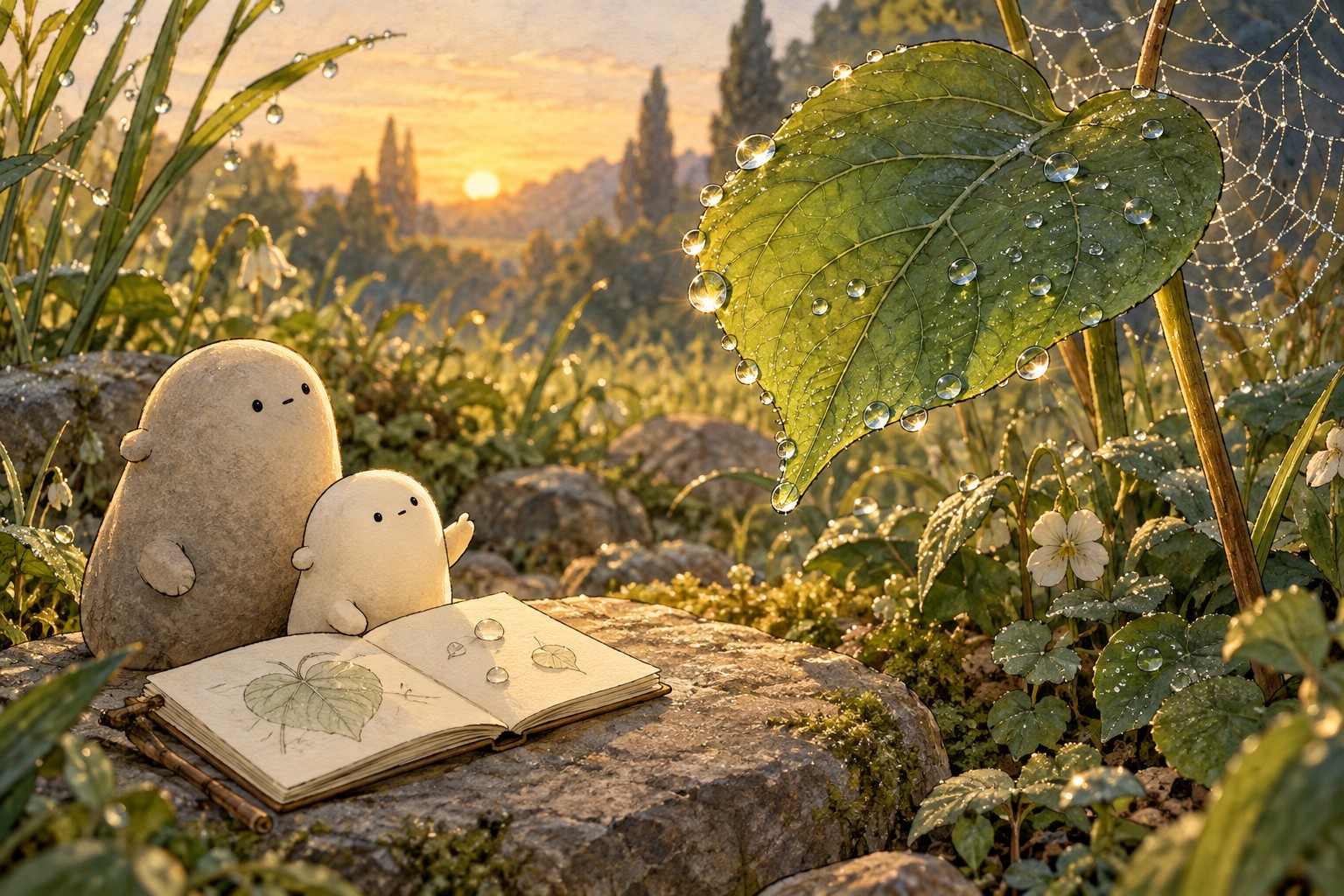
Little Wonderer studies an open notebook beside the wet leaf while Big Wonderer shares the view.

Little’s instructions

Little checked the order: cool the leaf, let air touch it, then notice dew. “My commands are like a little program,” Little said. “But nature does not read my notebook!” Big smiled. The instructions helped Little explain the changes, one step at a time.

Why does the order of the commands matter?

Warm sunrise reaches the same leaf; only a few dew beads remain as Big and Little Wonderer look on.

Back into the air

Sunrise warmed the leaf. The beads grew smaller as water began to evaporate: it changed from liquid back into invisible vapor. Little added one last command: “4. Warm the leaf.” The water was not gone forever. It had returned to the air. What would the next night bring?
Where can the water go after sunrise?

For a complete still story, download the foldable book.

Six clues to count

These are counts from Little’s notebook. Solve one question at a time.

Dew beads shine along a spider web beside the broad leaf, with Big and Little Wonderer looking closely.

The command “add 5 drops” makes a drawing pattern.

1. Little counts 38 dew drops on one leaf and 47 on another. How many drops are there altogether?

38 + 47 =

A small hint

Add 8 and 7 ones. Trade 10 ones for 1 ten.

2. A spider web has 72 dew beads. After sunrise, 38 evaporate. How many beads remain?

72 − 38 =

A small hint

Trade 1 ten for 10 ones. Subtract 8 from 12, then subtract the tens.

3. A leaf has 28 drops. Then 17 more form, and later 19 evaporate. How many drops remain?

28 + 17 − 19 =

A small hint

First find how many drops there are after 17 form. Then subtract 19.

4. Little draws 4 rows of dew beads with 6 beads in each row. How many beads does Little draw?

4 × 6 =

A small hint

Draw four equal rows. Add 6 + 6 + 6 + 6.

5. Little has drawn 27 drops and wants 60 in the notebook. How many more drops must Little draw?

27 + ___ = 60

A small hint

Count up from 27 to 30. Then count from 30 to 60.

6. Follow Little’s drawing command: add 5 drops each time. The counts are 12, 17, 22. What count comes next?

12, 17, 22, ___

A small hint

Repeat the same instruction: add 5 to the last count.

Give the leaf an instruction.

Choose one scene below. Write one command sentence for the leaf’s story. You may add a second step.

The same broad leaf rests under a clear night sky, with grass and a fine spider web nearby.

First, …tell the leaf what to do before dew forms

Dew beads shine along a spider web beside the broad leaf, with Big and Little Wonderer looking closely.

Then, …tell what to notice on the cool leaf

Warm sunrise reaches the same leaf; only a few dew beads remain as Big and Little Wonderer look on.

After sunrise, …tell what to watch as the leaf warms

Draw the leaf before or after your command. Add one label.

SAY IT FIRST. THEN DRAW OR WRITE.

A temporary space. Copy your words before closing or reloading; they are not saved or sent.

leafwater vaporcondensedewevaporatefirstthen

Read your sentence. Does it tell what to do, using a command such as Cool, Wait, Look, or Watch?

A night on one leaf

Follow the leaf’s instructions

  1. Predict. Could the leaf get wet even if no rain falls?
  2. Arrange in words. Imagine a clear, calm night, a leaf, and air holding invisible water vapor.
  3. Let the night pass. The leaf gives off heat to the sky. It can become colder than the air. Air touching it cools too.
  4. Notice. When that air cools to its dew point, vapor condenses into liquid dew on the leaf. Sunrise warms the leaf; dew evaporates back into vapor.

Say a command for each step: Cool the leaf. Wait for air to touch it. Look for tiny drops. Warm the leaf.

Quiz

1. What is water vapor?

2. What helps the leaf cool on a clear, calm night?

3. What happens when air touching the leaf cools to its dew point?

4. What happens as sunrise warms the dew?

Answer key
Quiz 1
Water vapor is invisible water in a gas form.
Quiz 2
The leaf gives off heat to the open sky and can become colder than the surrounding air.
Quiz 3
Some vapor condenses into liquid dew right on the leaf. At the dew point, the air is cool enough for condensation.
Quiz 4
Liquid dew evaporates into invisible water vapor. The water changes form; it is not gone forever.

A little book of morning dew.

Warm sunrise reaches the same leaf; only a few dew beads remain as Big and Little Wonderer look on.
Download foldable story ↓

US Letter · one-sided · portrait · 100% / actual size. Turn off fit-to-page and browser headers and footers.

  1. Print the PDF and follow the fold guide on its page 8 panel.
  2. An adult makes the single center cut shown by the solid line.
  3. Fold into a little book. The cover, six scenes, and fold guide make eight pages.