Wonder TogetherWONDER DAILYAll mornings

How a Bike Chain Works

How does one push of the pedal reach all the way to the back wheel?

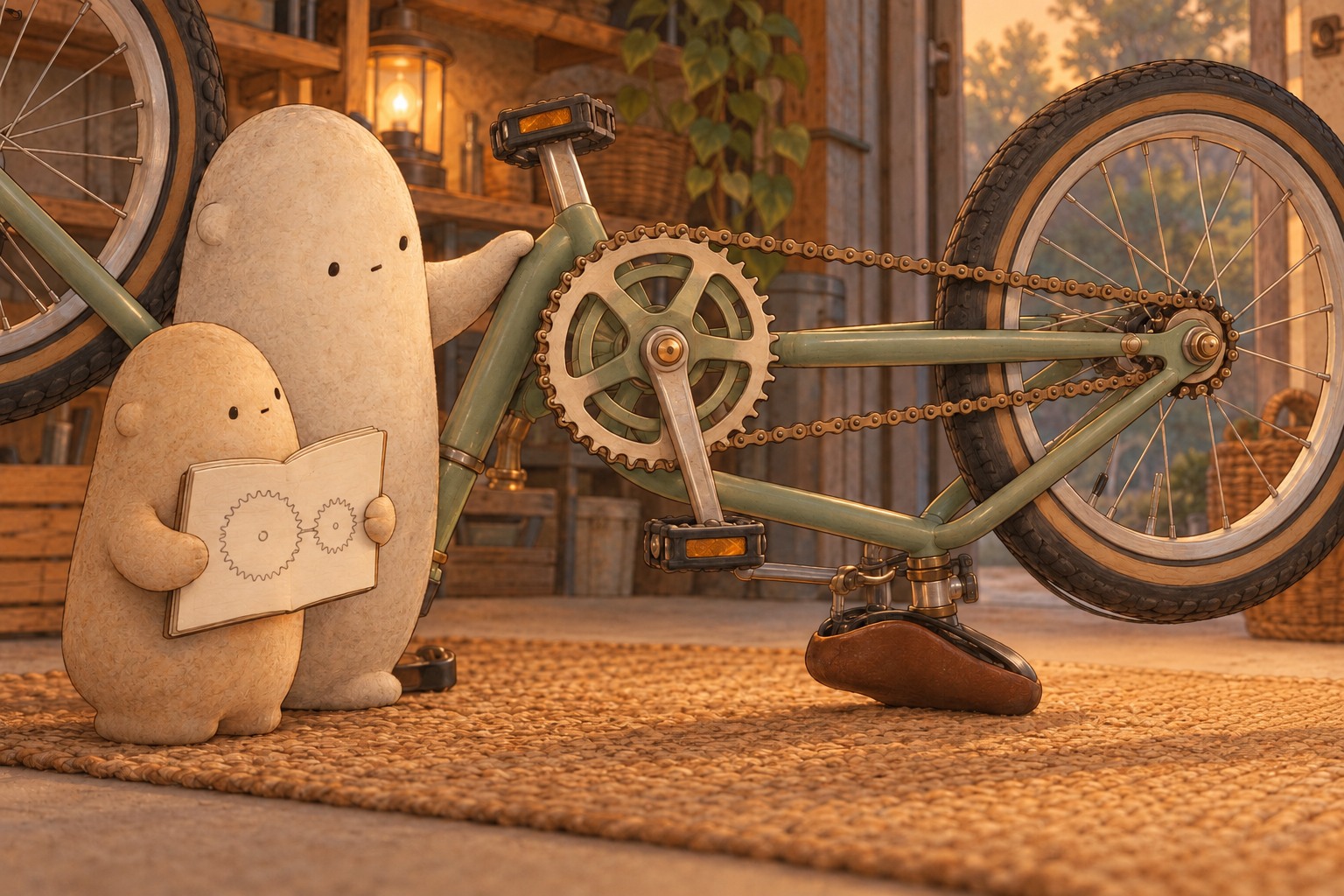
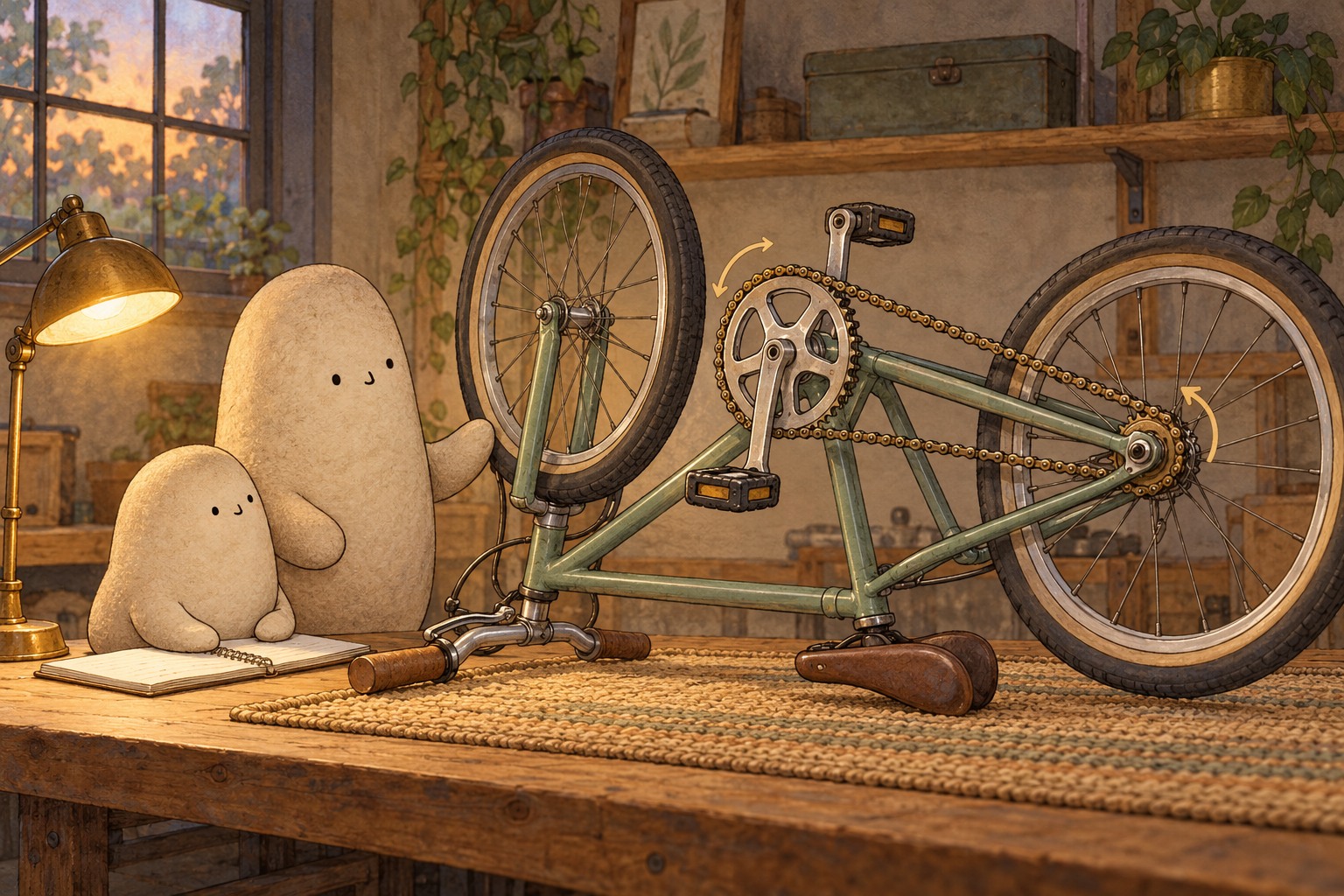
Big steadies a still upside-down bike on a mat while Little studies the chain between its front and back sprockets.
The chain connects the pedal’s sprocket to the back wheel’s sprocket.

How does the pedal reach the back wheel?

Follow the top of the chain between the two sprockets.

A little explanation & something to try

A sprocket is a toothed wheel. The front one, called the chainring, turns with the pedals. Its teeth pull the chain; the chain pulls the back sprocket’s teeth. That sprocket turns the back wheel as you pedal forward.

Try this. Use the diorama to follow turning, pulling, then turning again.

Big holds the frame of a still upside-down bike while Little counts sprocket teeth with a notebook.
Count teeth while every part is still.

What can a still bike show us?

Look for the chain’s links and the sprockets’ teeth.

A little explanation & something to try

Teeth fit into the spaces between the chain’s rollers. This fit lets the sprocket pull the chain without slipping. Count the front and back teeth while everything is still.

Try this. Count teeth first, then watch one slow pedal turn. Keep Big beside you. Count only while the bike is still. Big holds an upside-down bike steady on a mat; turn only the pedal slowly by hand, with fingers well away from chain, sprockets, and spokes whenever anything moves. Leave oiling and repairs to Big. At the table, try notched cardboard wheels and a bead loop, or tape paper strips into a chain. Use child scissors only with Big’s yes.

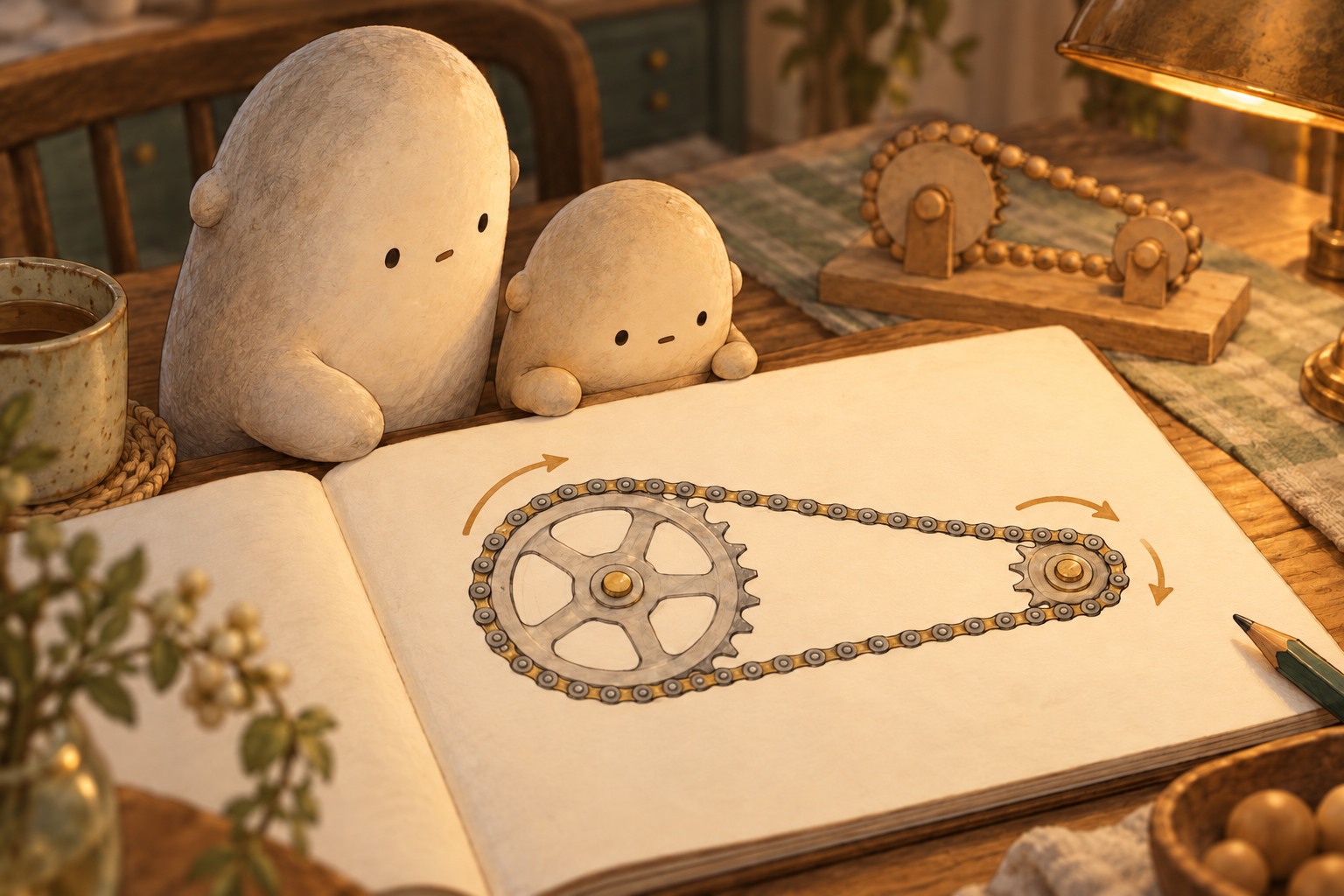
Big and Little study a notebook drawing of a large front sprocket, a smaller back sprocket, and curved turn arrows.
More front teeth can mean more back-wheel turns.

Can one pedal turn make two wheel turns?

Compare the big front sprocket with the small back one.

A little explanation & something to try

With 32 teeth in front and 16 behind, one pedal turn gives two back-wheel turns. A big front and small back help with faster riding. A small front and big back make pedaling easier uphill. These choices are gears.

Try this. Draw one circle for a pedal turn and two circles for the back wheel’s turns.

Follow one pedal push

Big steadies a still upside-down bike on a mat while Little studies the chain between its front and back sprockets.

How a Bike Chain Works

Big steadies a still upside-down bike on a mat while Little studies the chain between its front and back sprockets.

A push has a path

Little Wonderer studied the bike resting on its mat. The pedals sat far from the back wheel. “How does one push reach all that way?” A chain joined them. It was a loop of small metal pieces called links. Big pointed along the loop, from the front sprocket to the back.

What connects the pedals to the back wheel?

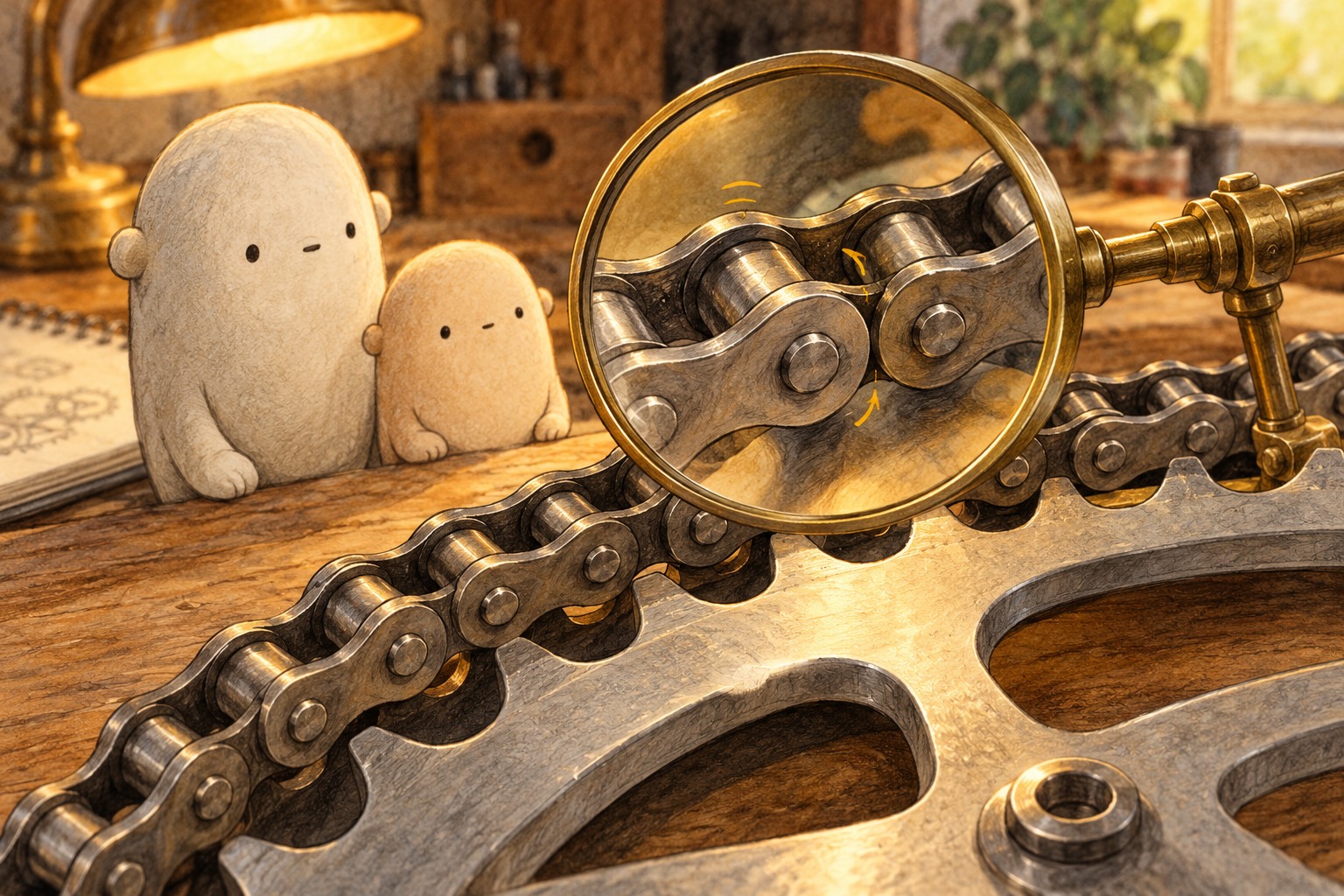
A magnifier shows chain links, round pins, and rollers fitting around sprocket teeth while Big and Little watch.

Bend at each pin

Each link joined the next with a tiny pin. The links could turn at these joints, so the chain bent around a wheel without stretching like rubber. That toothed wheel was a sprocket. Its teeth fitted between the chain’s rollers. The hooked-together shapes kept the chain from slipping as it pulled.

Why do joints help a chain fit around a sprocket?

Big holds the frame of a still upside-down bike while Little counts sprocket teeth with a notebook.

Teeth to count

With the bike completely still, Little counted teeth. The big front sprocket, called the chainring, turned with the pedals. Its teeth pulled the top of the chain toward the front. The moving chain pulled the back sprocket’s teeth. While pedaling forward, that sprocket drove the back wheel. Turning became pulling, then turning again.

Which part pulls the top of the chain?

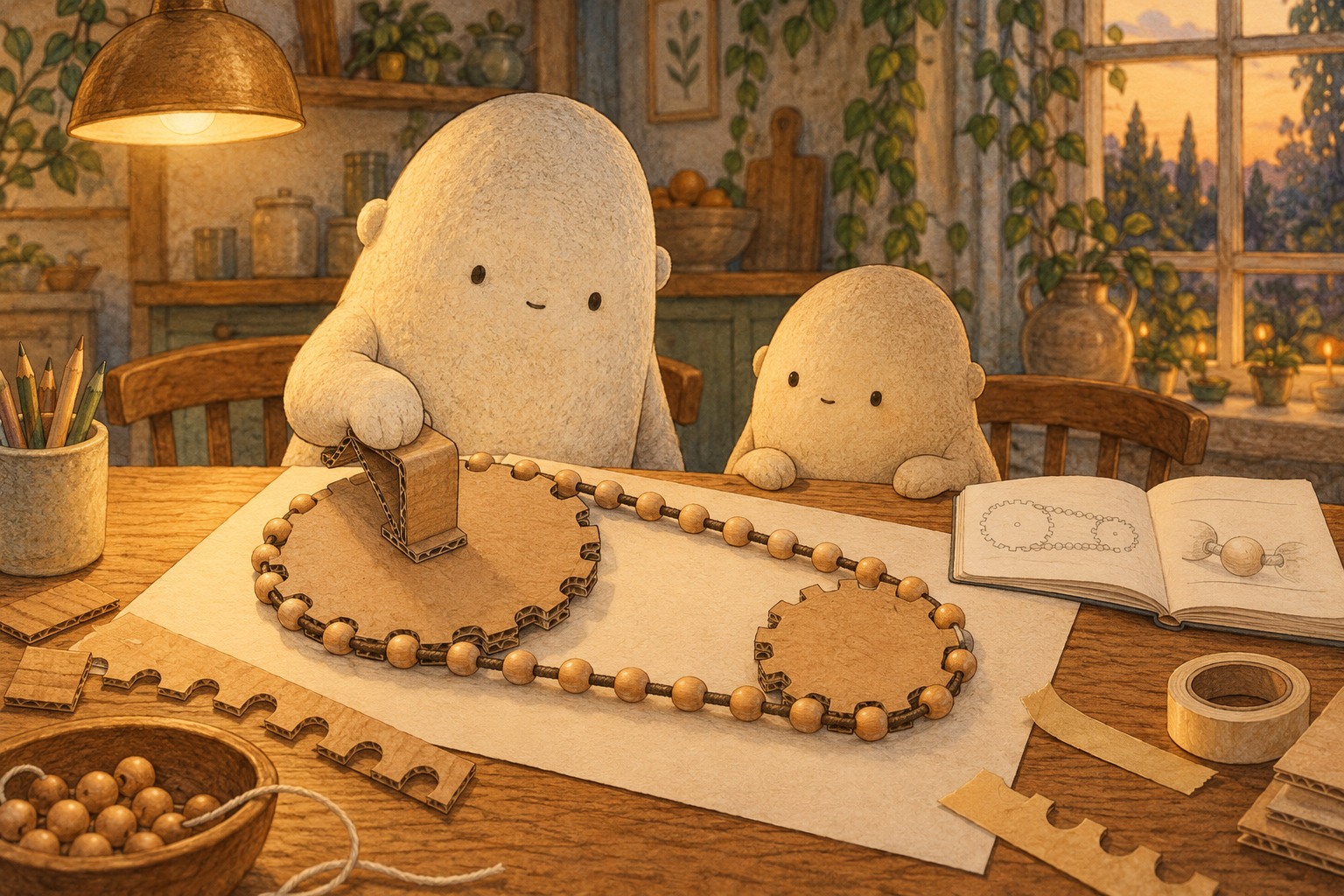
Big and Little follow a wooden bead loop joining a big notched cardboard wheel and a small one.

A loop on the table

At the table, Big turned a cardboard wheel by its middle. A loop of beads sat in notches around its edge. As the big wheel turned, it pulled the bead loop. The loop turned a smaller wheel. Little followed one bead around. Each part passed the motion to the next.

How does the bead loop pass motion between wheels?

Big and Little study a notebook drawing of a large front sprocket, a smaller back sprocket, and curved turn arrows.

One turn becomes two

The notebook showed 32 teeth in front and 16 at the back. One pedal turn moved the chain past 32 teeth: enough for two back-wheel turns. A big front and small back suit faster riding. A small front and big back make pedaling easier uphill. These choices are called gears.

Which gear choice would make an uphill pedal push easier?

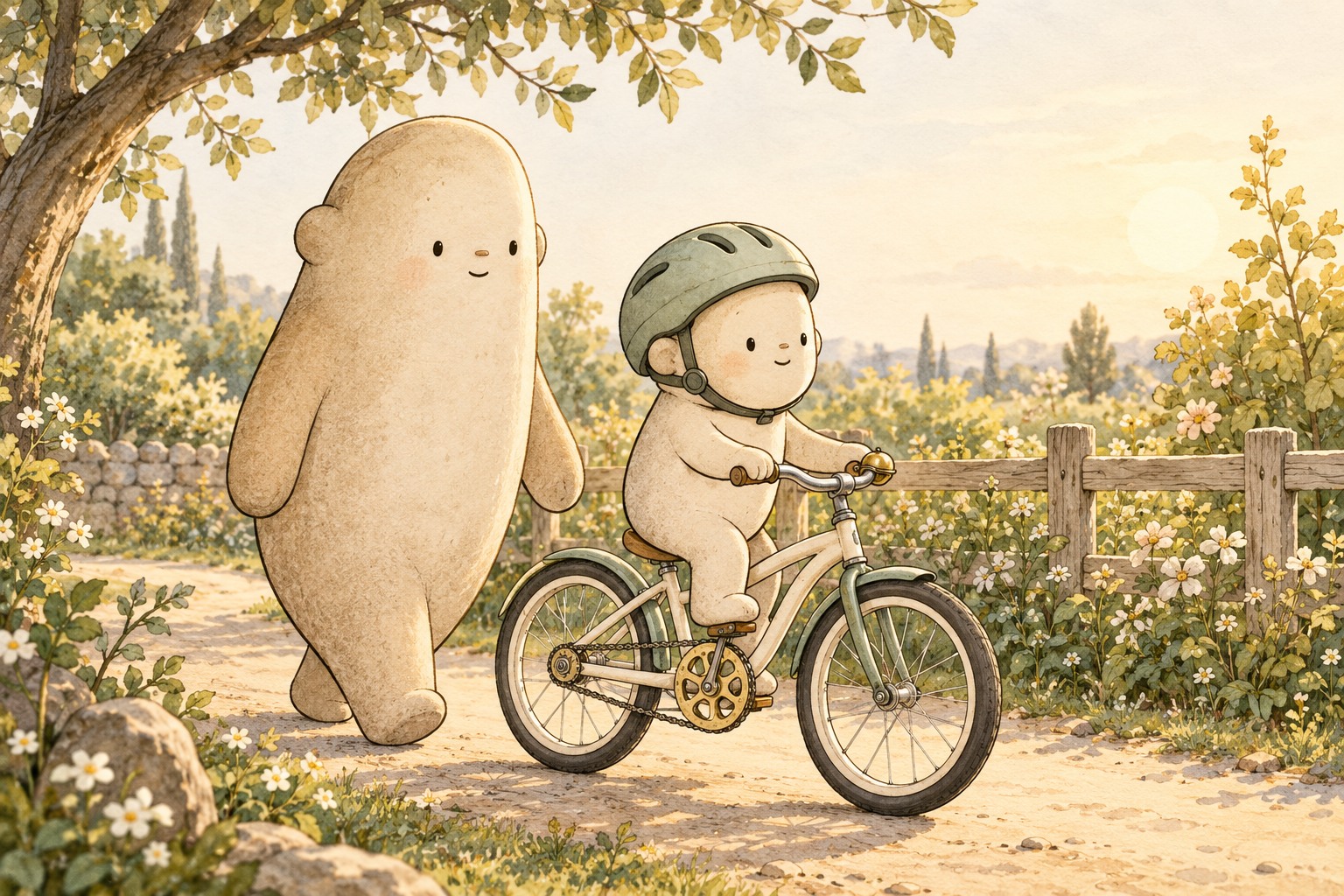
Helmeted Little rides slowly on a quiet garden path with Big walking beside the bike.

A push goes with you

Little’s helmet was snug for a gentle ride beside Big. The chain carried each pedal pull to the back wheel. A drill bit’s spiral carries chips; a bike chain carries a pull. Turning shapes could do different jobs. “Where else could a loop carry motion?” Little wondered.
Where else might a loop carry a pull?

For a complete still story, download the foldable book.

Small stories around a bike

Find the two amounts in each story, then add or subtract.

Big and Little follow a wooden bead loop joining a big notched cardboard wheel and a small one.
The big wheel pulls a loop that turns the small wheel.

Draw the amounts in one story to show how you found the answer.

1. Little joins 28 paper links, then adds 17 more. How many links are in the paper chain?

28 + 17 =

A small hint

Combine the links from both groups.

2. Big has 64 beads and threads 26 onto a model chain. How many beads are left?

64 − 26 =

A small hint

Take away the beads already threaded.

3. Little records 23 slow pedal turns, then 19 more. How many pedal turns are recorded?

23 + 19 =

A small hint

Join the two counts of pedal turns.

4. A paper gear has 52 drawn teeth. Little colors 18. How many teeth still need color?

52 − 18 =

A small hint

Subtract the teeth that are colored.

5. A bike has 32 teeth on its front sprocket and 16 on its back sprocket. How many teeth is that in all?

32 + 16 =

A small hint

Add the teeth on the two sprockets.

6. Little plans 15 gentle driveway laps and finishes 7. How many laps are left?

15 − 7 =

A small hint

Take the finished laps away from the plan.

Give the chain a clear command

Choose a still view and tell what to count or draw.

A magnifier shows chain links, round pins, and rollers fitting around sprocket teeth while Big and Little watch.
Pins let links bend; teeth catch the chain.

Trace …name the loop you will follow

Big holds the frame of a still upside-down bike while Little counts sprocket teeth with a notebook.
Count teeth while every part is still.

Count …name the teeth on a still sprocket

Big and Little follow a wooden bead loop joining a big notched cardboard wheel and a small one.
The big wheel pulls a loop that turns the small wheel.

Draw …show how a loop joins two wheels

Draw two sprockets joined by a chain. Add an arrow along the top of the chain.

SAY IT FIRST. THEN DRAW OR WRITE.

A temporary space. Copy your words before closing or reloading; they are not saved or sent.

chainlinkpinsprocketteethpedalgearpullturnwheel

Does your command begin with an action word, such as Trace, Count, or Draw?

Follow the pedal’s pull

One loop connects a big front sprocket to a small back sprocket.

A pedal, two sprockets, and one chain loopThe front sprocket has 32 teeth. The back has 16. Links travel around both while their pins let them bend. The front pulls the upper chain toward itself; both sprockets turn clockwise. Follow the gold link and the mark on the back wheel.
Back sprocket · 16 teethJoined to the back wheelFront sprocket · 32 teethJoined to the pedal

Pedal turns 0

Back-wheel turns 0

Which makes more turns: the back wheel, or the pedals? Choose a guess if you like.

Follow one pedal push

  1. Find the pedal and the front sprocket with 32 teeth.
  2. Trace the upper chain toward the front sprocket. Its teeth pull the links.
  3. The chain pulls the 16-tooth back sprocket. It turns with the back wheel while pedaling.
  4. Count the turns: one at the pedals, two at the back wheel. What connects the two?

Quiz

1. Why can a bike chain bend around a sprocket?

2. What does the front sprocket do as you pedal forward?

3. With 32 teeth in front and 16 behind, how many back-wheel turns come from one pedal turn?

4. Which sprocket pair makes pedaling easier uphill?

Answer key
Quiz 1
Tiny pins join the links and let neighboring links turn at their joints.
Quiz 2
The front sprocket’s teeth pull the chain. The chain then pulls the back sprocket’s teeth.
Quiz 3
The back wheel turns twice: 32 front teeth move the chain past two groups of 16 back teeth.
Quiz 4
A small front sprocket and a big back sprocket make pedaling easier uphill, with fewer wheel turns per pedal turn.

A little book of pedal pushes

Helmeted Little rides slowly on a quiet garden path with Big walking beside the bike.
A chain carries each pedal pull to the back wheel.
Download foldable story ↓

US Letter · one-sided · portrait · 100% / actual size. Turn off fit-to-page and browser headers and footers.

  1. Print the PDF and follow the fold guide on its page 8 panel.
  2. An adult makes the single center cut shown by the solid line.
  3. Fold into a little book. The cover, six scenes, and fold guide make eight pages.