Treat behavior as part of the API
Components defined interaction and state—not only appearance—so product teams could depend on the same behavior across applications.
Epsilon / Design system
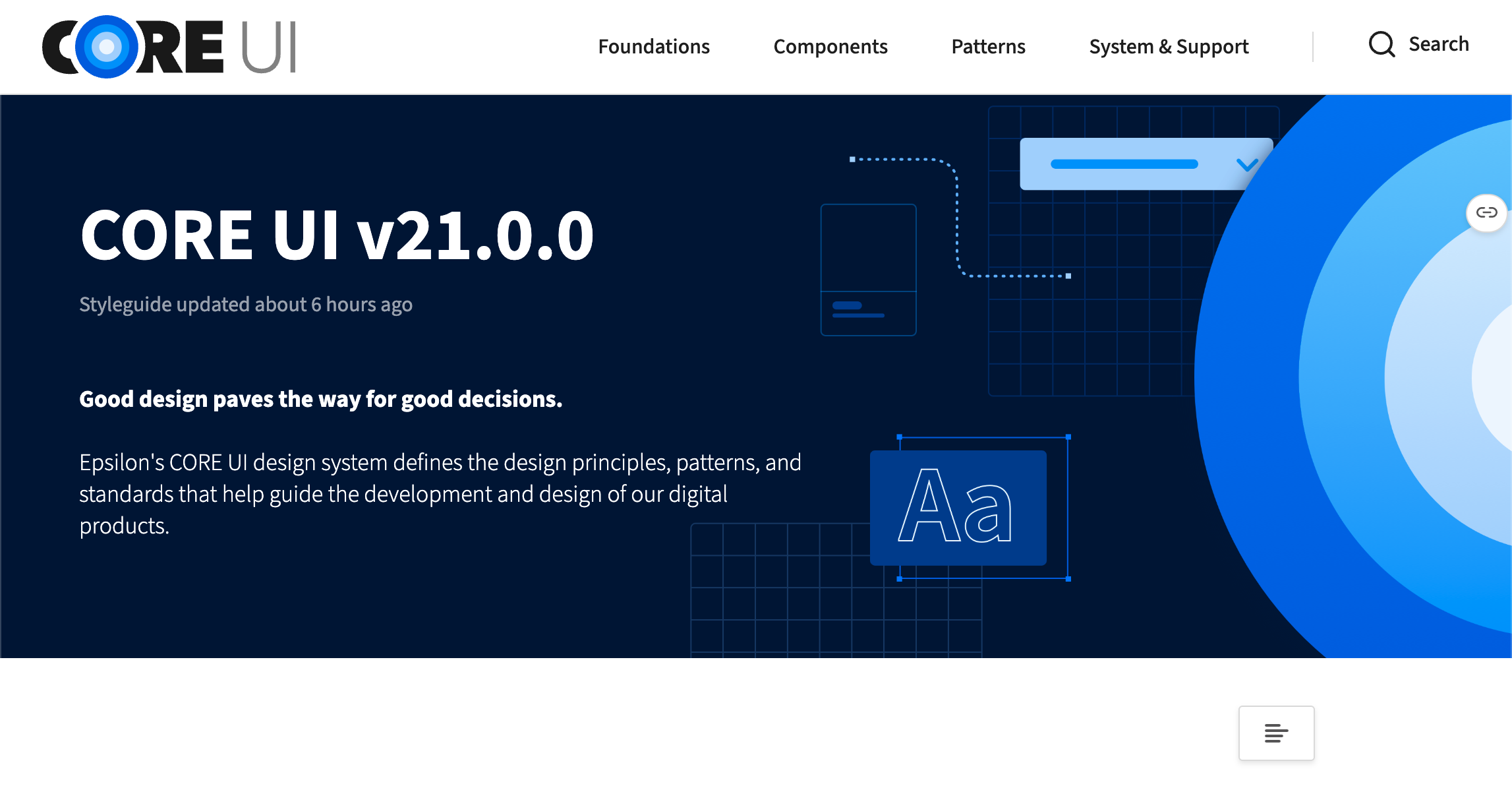
I was one of Epsilon’s founding UX engineers, helping establish the discipline and grow Core UI from a side-project component library into a company-wide system for building more consistent, accessible interfaces.
The problem
Product teams needed common controls, layout patterns and accessible behavior, but the answers lived in separate applications and local decisions. That meant duplicated effort for engineers and inconsistent experiences for the people using the software.
A component library could reduce repetition. A useful system had to do more: make the intended behavior clear, connect design decisions to production code and give teams a practical way to improve the shared work.
The system
Core UI brought the recurring parts of product design and front-end implementation into a common foundation. Teams could start with known behavior, then spend more time on the problem that made their product distinct.
Key decisions
Components defined interaction and state—not only appearance—so product teams could depend on the same behavior across applications.
Keyboard behavior, focus, semantics and contrast belonged in the shared implementation instead of becoming work every product team had to rediscover.
Tokens, documentation and live component examples gave designers and engineers a common reference for what should ship.
Contribution and review practices brought product knowledge back into the system while protecting consistency and maintainability.
My contribution
I helped create the foundation, practices and shared understanding that let more people produce better interface work.
Epsilon’s UX Engineering discipline and a clearer place for work that joined interaction design with production implementation.
The system direction, component patterns and technical boundaries that helped Core UI grow beyond its side-project beginnings.
Accessible defaults and shared review practices so consistent behavior could travel with the components.
Designers and engineers to use, discuss and extend the system instead of depending on a small group for every interface decision.
What changed
Core UI grew into a company-wide system that gives teams shared components, design tokens, accessible patterns, documentation and live implementation examples. It reduced repeated decisions while giving teams a clearer foundation for their own product work.
Core UI lasted because people could understand the decisions, use the parts in real work and help improve the foundation.