Wonder TogetherWONDER DAILYAll mornings

A bean becomes.

So much can happen before we see a leaf.

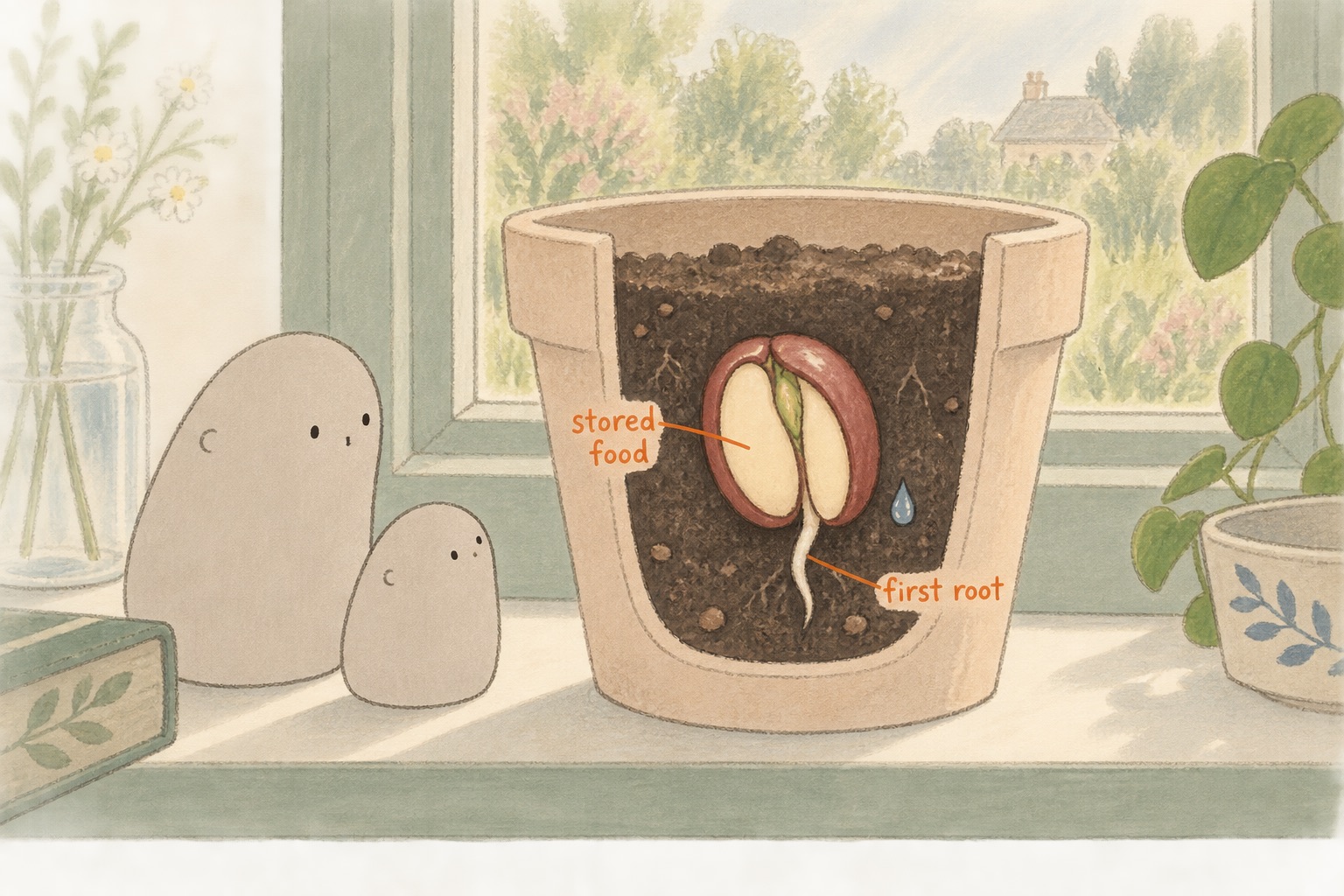
Big and Little Wonderer look into an illustrated pot cutaway. A split bean holds two pale food stores and a first root pointing down.

What is waking up inside this little bean?

Look inside the seed coat. What might those two pale halves be keeping safe?

A little explanation & something to try

A tiny plant is already inside. The bean holds food to help it begin.

Try this. Curl one hand like a seed. Slowly uncurl a finger for its first root.

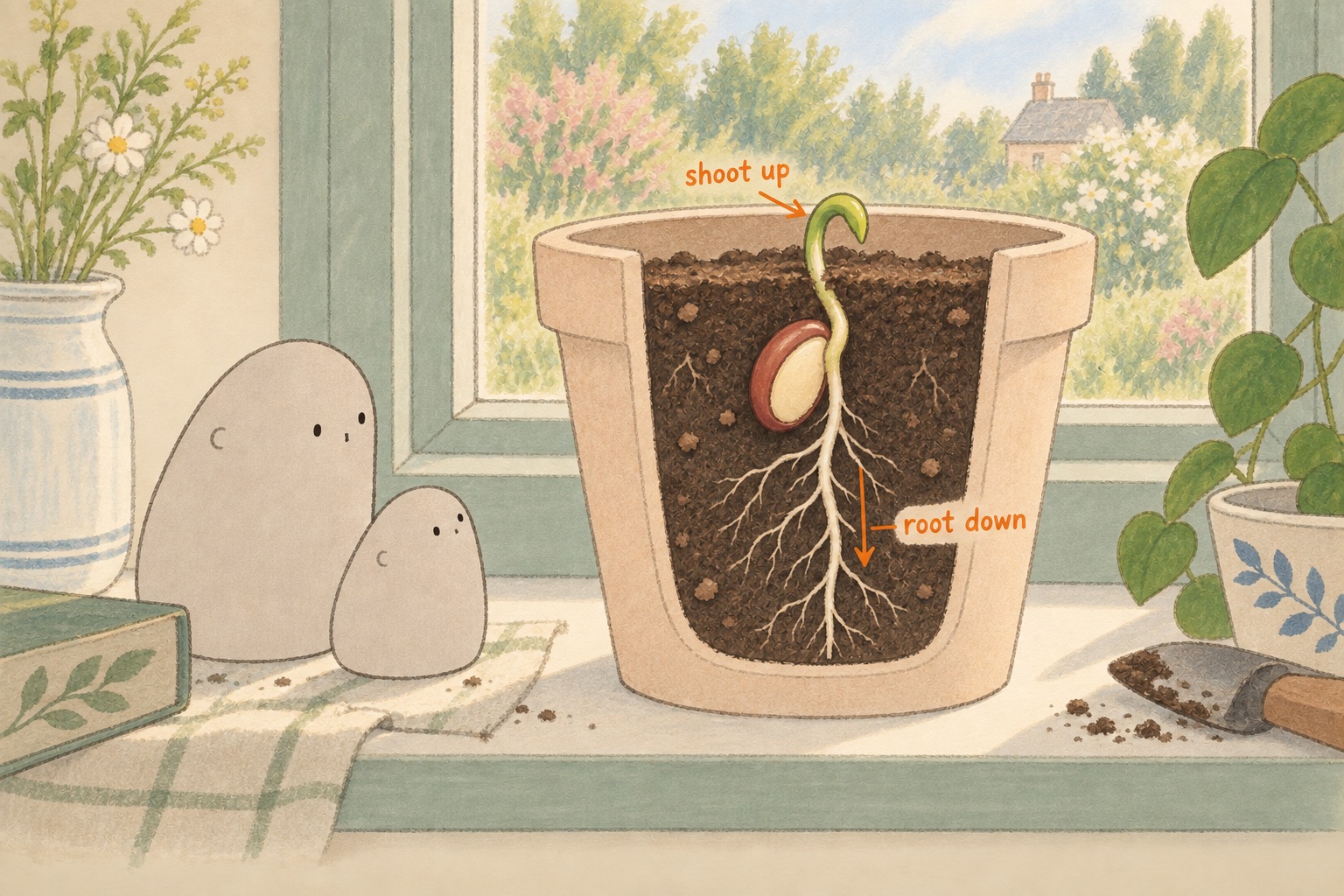
The same windowsill pot shows a young shoot above the soil and a long branching root below. Notes say shoot up and root down.
Roots and shoots respond to their surroundings. Plants do not need eyes.

How does a root find its way when it cannot see?

Follow the white root down. Now follow the little shoot up. What do you notice?

A little explanation & something to try

The root does not need eyes. It responds to gravity, which helps it grow down.

Try this. Follow the two directions in the air: root down, shoot up.

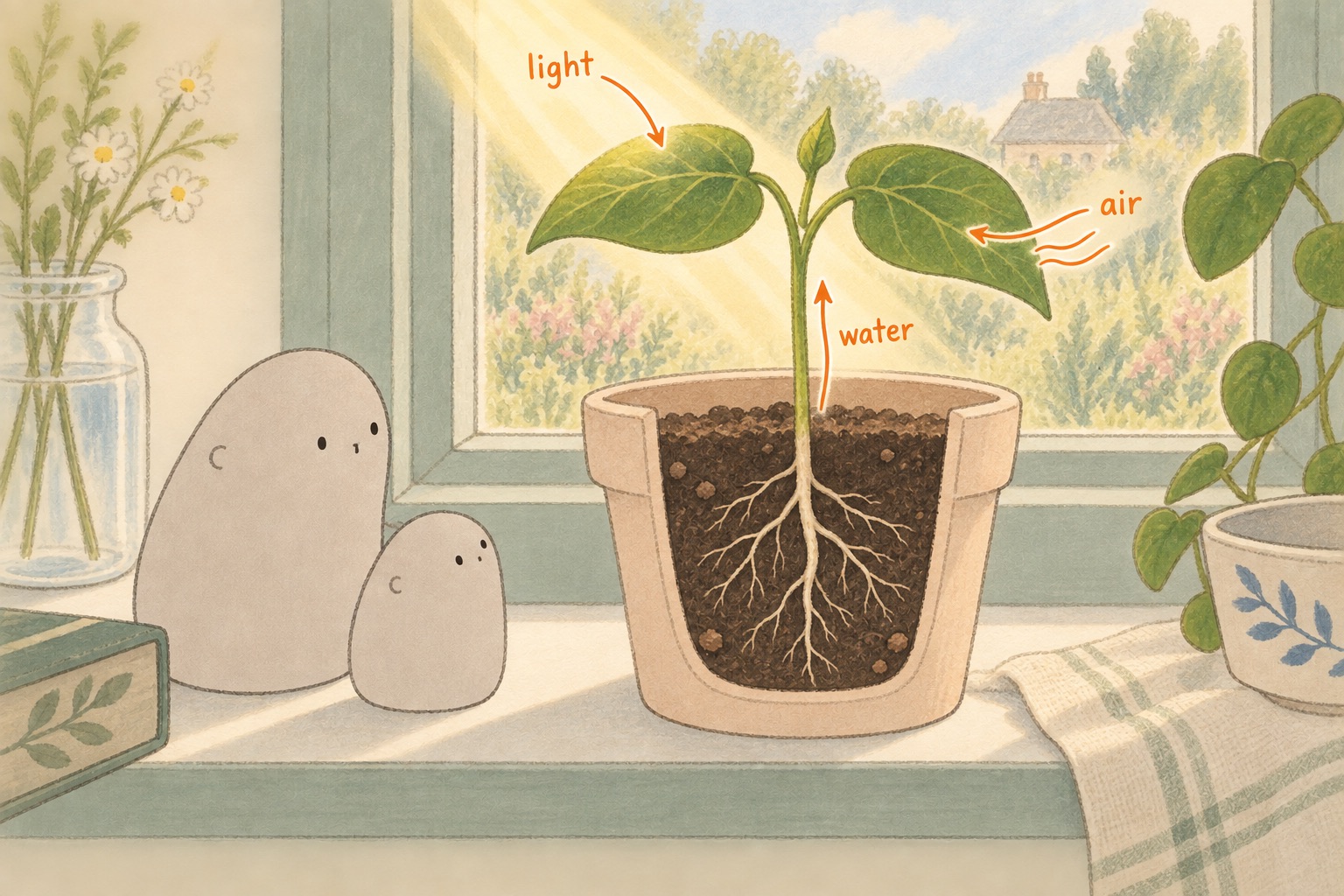
Two open green bean leaves meet arrows for light and air. A water arrow leads up the stem from roots below the soil.
Leaves make new food using light, water, and carbon dioxide from the air.

What can a leaf do that a seed cannot?

Find the three notes around the leaves. Where does each arrow lead?

A little explanation & something to try

Green leaves use light, water, and part of the air to make new food. The seed began with food stored inside.

Try this. Follow a path from the roots to a leaf. Then point to the light.

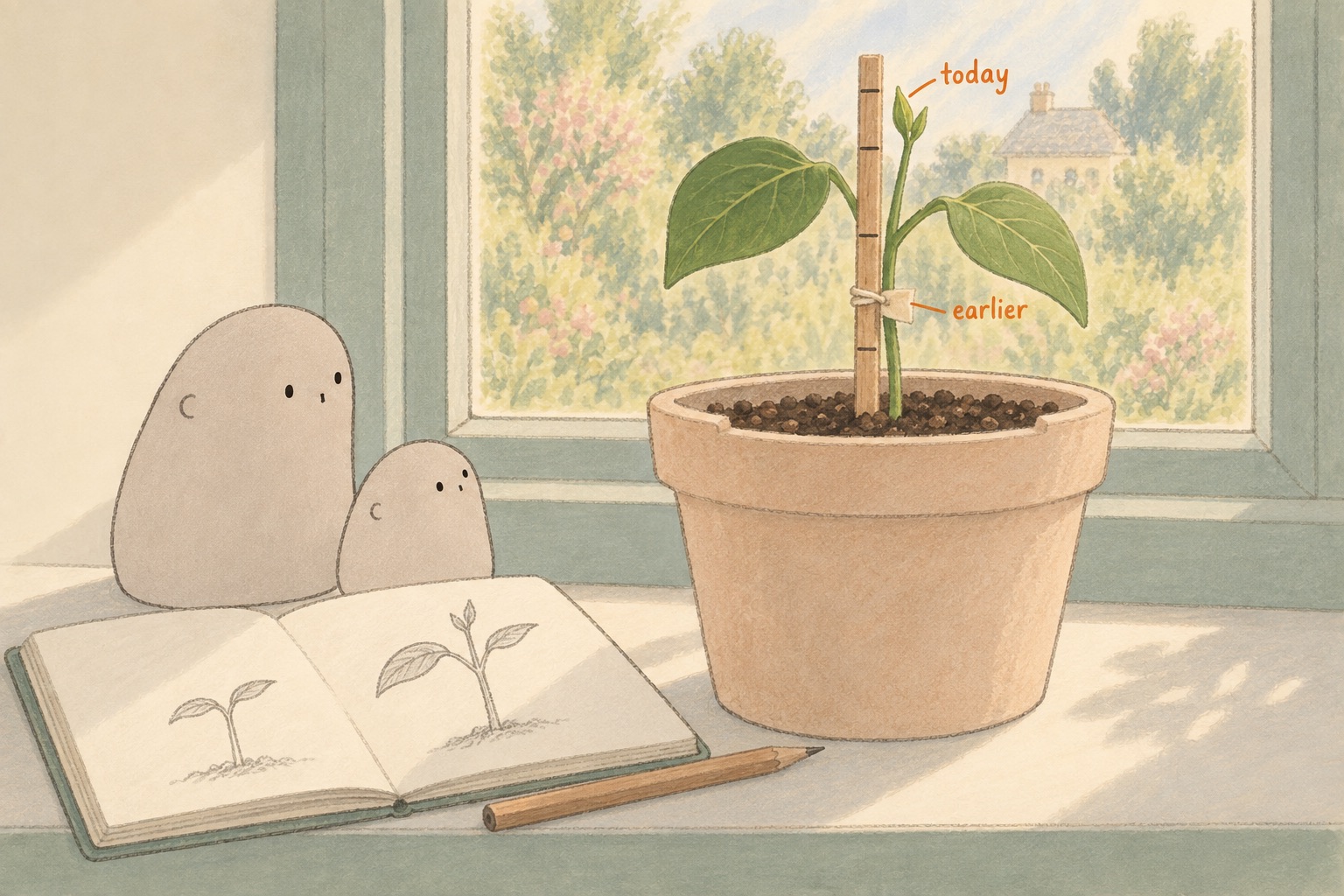
A leafy bean stands beside a measuring stick with an earlier mark below today's tip. An open notebook holds two plant sketches.
Compare from the soil level.

How could we notice a change too slow to watch?

Find the earlier mark and today's tip. What could a drawing help us remember?

A little explanation & something to try

We can compare notes from different days. Growth can happen too slowly for our eyes to catch it happening.

Try this. Hold a finger at the earlier mark. With your other hand, show the space up to today's tip.

The quiet work of growing

Big and Little Wonderer look into an illustrated pot cutaway. A split bean holds two pale food stores and a first root pointing down.

A bean becomes.

Big and Little Wonderer look into an illustrated pot cutaway. A split bean holds two pale food stores and a first root pointing down.

Small, but not empty

A bean rests in an open hand. “Is anything in there?” Inside, a tiny plant waits. Stored food will help it begin before leaves can cook new food.

Where are the pale food stores in the picture?

The same windowsill pot shows a young shoot above the soil and a long branching root below. Notes say shoot up and root down.

Down and up

With water, air, and enough warmth, a root tips out first. It grows down with gravity. A shoot climbs toward light. Two directions from one quiet start.

Which way does the root go? Which way does the shoot go?

Two open green bean leaves meet arrows for light and air. A water arrow leads up the stem from roots below the soil.

A new way to make food

Leaves unfold in the light. They use light, water, and carbon dioxide from the air to make food. Now the plant can make more of what it needs.

What three things do the orange notes name?

A leafy bean stands beside a measuring stick with an earlier mark below today's tip. An open notebook holds two plant sketches.

Too slow to see?

“It looks the same,” says Little Wonderer. Big Wonderer opens the notebook. Yesterday’s mark sits lower than today’s tip. Notes catch slow change.

What did the notebook help them notice?

Big and Little Wonderer look into an illustrated pot cutaway. A split bean holds two pale food stores and a first root pointing down.

Look back at the beginning

They look back at the beginning. Did the bean need open leaves to start? Inside, the tiny plant already had stored food — a lunch packed before the first leaf.

What in the picture helps explain your answer?

A leafy bean stands beside a measuring stick with an earlier mark below today's tip. An open notebook holds two plant sketches.

A question to keep

They sit by the window. Growing takes time. “What might change next?” Little Wonderer keeps a new question for tomorrow.
What is one thing you still wonder?

Next: Math
For a complete still story, download the foldable book.

How much did it grow?

Use the notebook heights. Centimeters are length units; cm is the short name.

A leafy bean stands beside a measuring stick with an earlier mark below today's tip. An open notebook holds two plant sketches.
Compare from the soil level.
Notebook · height above soil
Day4812
Height8 cm14 cm23 cm

1. Day 4: 8 cm. Day 8: 15 cm. How many cm did it grow in between?

14 − 8 =

A small hint

Take the Day 4 height away from the Day 8 height.

2. Day 12: 23 cm. From Day 8 to Day 12, how many cm did it grow?

23 + 9 =

A small hint

Start with 23. Subtract the Day 8 height.

3. How many days from Day 4 to Day 12?

12 − 4 =

A small hint

Count the days between the two dates. Or subtract 4 from 12.

4. From Day 4 (8 cm) to Day 12 (23 cm), how many cm of growth in all?

23 − 8 =

A small hint

Subtract the earlier height from the later height.

5. It grows 4 cm one day and 4 cm the next. How much growth together?

4 + 4 =

A small hint

Add the two days of growth.

6. You watch for 7 days. You already watched 3. How many days are left?

7 − 3 =

A small hint

Take 3 away from 7.

Tell the bean's small story.

Choose a scene. Look closely, say your idea, then draw or write what the picture helped you understand.

Big and Little Wonderer look into an illustrated pot cutaway. A split bean holds two pale food stores and a first root pointing down.

Inside the bean, …What is kept there?

The same windowsill pot shows a young shoot above the soil and a long branching root below. Notes say shoot up and root down.
Roots and shoots respond to their surroundings. Plants do not need eyes.

The root grows …Where does it go? What does it take in?

Two open green bean leaves meet arrows for light and air. A water arrow leads up the stem from roots below the soil.
Leaves make new food using light, water, and carbon dioxide from the air.

The leaf uses …What helps it make food?

Draw the seed, root, or leaf you chose. Label one part and add an arrow to show what it does.

SAY IT FIRST. THEN DRAW OR WRITE.

A temporary space. Copy your words before closing or reloading; they are not saved or sent.

seedstored foodrootshootleaflightwater

Read your words aloud. Can you point to the part they explain? Add a capital letter and an ending mark if you are writing.